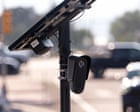
Surveillance creep doesn't arrive with a dramatic announcement or an army of robots. It arrives quietly, bolted to a utility pole on an ordinary street corner, disguised as a public safety upgrade. When police departments buy automated license plate reader systems, they promise crime reduction, stolen car recovery, and safer neighborhoods. They rarely talk about what happens when an officer uses that same multi-million dollar tracking apparatus to help a family member stalk a domestic abuse victim.
That exact scenario played out in California. A San Jose police officer got fired after using his department's automated license plate tracking database to look up a woman's movements on his personal phone, then texting her location straight to his cousin—the very person accused of abusing her. The victim only found out because her abuser casually dropped hints that he knew exactly where she was.
It is a terrifying betrayal of public trust. But honestly? It shouldn't shock anyone who has been paying attention to how police data networks actually operate behind closed doors.
The Dangerous Reality of Automated License Plate Readers
Automated license plate readers (often made by companies like Flock Safety) scan thousands of plates per hour, logging time, exact GPS coordinates, and vehicle characteristics into searchable databases. Police agencies love them because they act as digital nets, capturing the daily routines of ordinary citizens who haven't committed any crime.
Critics have warned about mass surveillance for years, but the conversation usually centers on government overreach or data sharing with federal immigration authorities. What gets lost in the noise is the insider threat. When you give thousands of local law enforcement officers unvetted, searchable access to a live tracking grid of an entire city, you are basically building the ultimate tool for stalkers, jealous exes, and corrupt cops.
Research from groups like the Institute for Justice shows this isn't an isolated glitch. Dozens of law enforcement officers across the country have misused license plate tracking tech to track down romantic partners, harass citizens, or settle personal scores.
Accountability Falls Short When Laws Fail
Chief Paul Joseph of the San Jose Police Department did the right thing by firing the officer quickly and calling out the breach. Yet, the system surrounding him failed to deliver true accountability. The department referred the case to the Santa Clara county district attorney's office, but prosecutors chose not to file criminal charges against the officer.
Let that sink in. Using a police surveillance database to endanger a domestic abuse victim is somehow not a clear-cut crime under existing state statutes. Chief Joseph himself admitted that lawmakers need to step up and make these violations explicit criminal offenses rather than mere internal policy breaches.
Meanwhile, California politicians continue to stall on real safeguards. The state assembly recently adjourned without passing strict regulations, marking years of legislative foot-dragging. Governor Gavin Newsom even vetoed a bill that would have required agencies to delete non-investigative data after two months. Lawmakers prefer endless debate while commercial tracking tools expand unchecked into every corner of public life.
How to Protect Your Privacy in a Surging Surveillance State
You cannot rely on politicians or police departments to safeguard your location data. If you are worried about digital tracking, you have to take practical steps to protect yourself.
- Audit your vehicle setup: Be aware that automated cameras log your commute, your grocery trips, and your weekend visits automatically.
- Support local privacy ordinances: Push your city council to ban or heavily restrict police data-sharing partnerships with private vendors.
- Demand strict data retention limits: If your local police department uses plate readers, demand a strict deletion policy of 48 hours or less for vehicles not tied to an active warrant.
The promise of high-tech policing always sounds clean on paper. But as the San Jose case proves, the human element remains messy, dangerous, and entirely too willing to abuse absolute power when nobody is watching.