You’ve heard the speeches before. Every September, politicians fly into New York, step up to the United Nations General Assembly podium, talk about planetary survival for fifteen minutes, and fly home. Nothing changes.
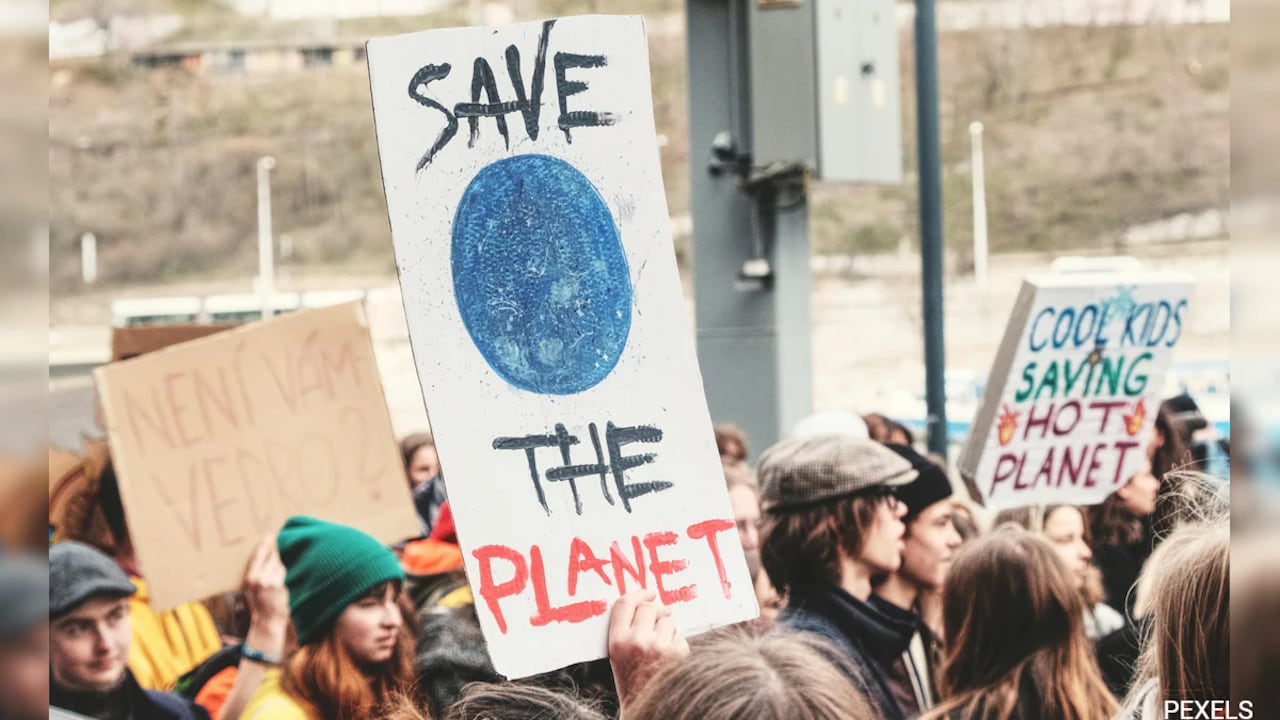
Except now, the ocean is literally knocking on the door. Island nations aren't just worried about warming temperatures anymore; they're staring down total geographic erasure. And they've stopped being polite about it.
When El Salvador's foreign minister, Alexandra Hill Tinoco, took the stage recently and asked where the United Nations was, she wasn't just throwing rhetorical punches. She was voicing a frustration felt across the global south. The architecture of international cooperation was built in 1945 by victors of a different war, for a different century. It’s broken. And world leaders are finally saying it out loud.
The 1945 Security Council Problem
Let’s look at why the system is structurally paralyzed. The United Nations Security Council holds the keys to actual enforcement. It has fifteen members, but only five hold permanent seats with absolute veto power: the United States, Russia, Britain, China, and France.
Those five nations get to block any resolution they don't like, for any reason at all, without accountability. They've held that monopoly since the end of World War II.
If you're an island nation in the Pacific whose very existence is threatened by rising tides, or an African nation representing over a billion people with zero permanent veto power, this setup looks less like a global democracy and more like an old boys' club that refuses to share the wheel.
Matthew Wale, the prime minister of the Solomon Islands, didn't mince words when he called the veto a relic. Chile's president, José Antonio Kast, put it bluntly: you can't run a 2026 planetary crisis on rules written in 1945. Africa currently holds three rotating seats on the council and nothing more. Leaders from the continent are no longer asking for a seat at the table as a polite favor. They're demanding it as an absolute right.
Sovereignty Versus Survival
Here's the eternal catch-22 of global politics. Every country wants cooperation when a crisis crosses its borders, but nobody wants an outsider telling them what to do inside their own territory.
From North Korea to the Marshall Islands, leaders constantly invoke lofty ideals of global unity while fiercely guarding their sovereign boundaries. Luxembourg's head of state, Grand Duke Guillaume, pointed out the obvious paradox: we're more connected than ever, yet trust is at an absolute low.
In the United States, skepticism toward multilateral organizations runs deep. Critics view global bodies through a lens of lost autonomy, fearing that international agreements mean handing over domestic control to faceless bureaucrats. But here's the reality check. Climate change, artificial intelligence, and global pandemics don't check passports at the border. You can't build a wall against a rising ocean.
When smaller nations look at how major global powers handled recent crises, they see a clear message: your sovereignty matters only as long as it's convenient for the heavyweights. Philip Edward Davis, prime minister of the Bahamas, summed it up best by noting that a sovereignty that requires permission isn't real sovereignty at all.
Moving Past Talk Shops
The central theme of recent UN gatherings has been "restoring trust." But trust isn't restored through press releases or photo ops. It's restored when institutions actually deliver results.
Austria's minister for European and International Affairs reminded everyone of a fundamental truth: the United Nations wasn't created to be a debating society for international problems. It was created to solve them.
Right now, it isn't solving them. When nations facing existential threats are forced to sit on the sidelines while five permanent security council members gridlock over geopolitics, the entire premise of global governance crumbles.
If the system refuses to reform, smaller states will start looking elsewhere for alliances, trade networks, and climate funding. The era of patient waiting is over. The United Nations either adapts to the realities of a warming planet and a multipolar world, or it risks becoming completely irrelevant.