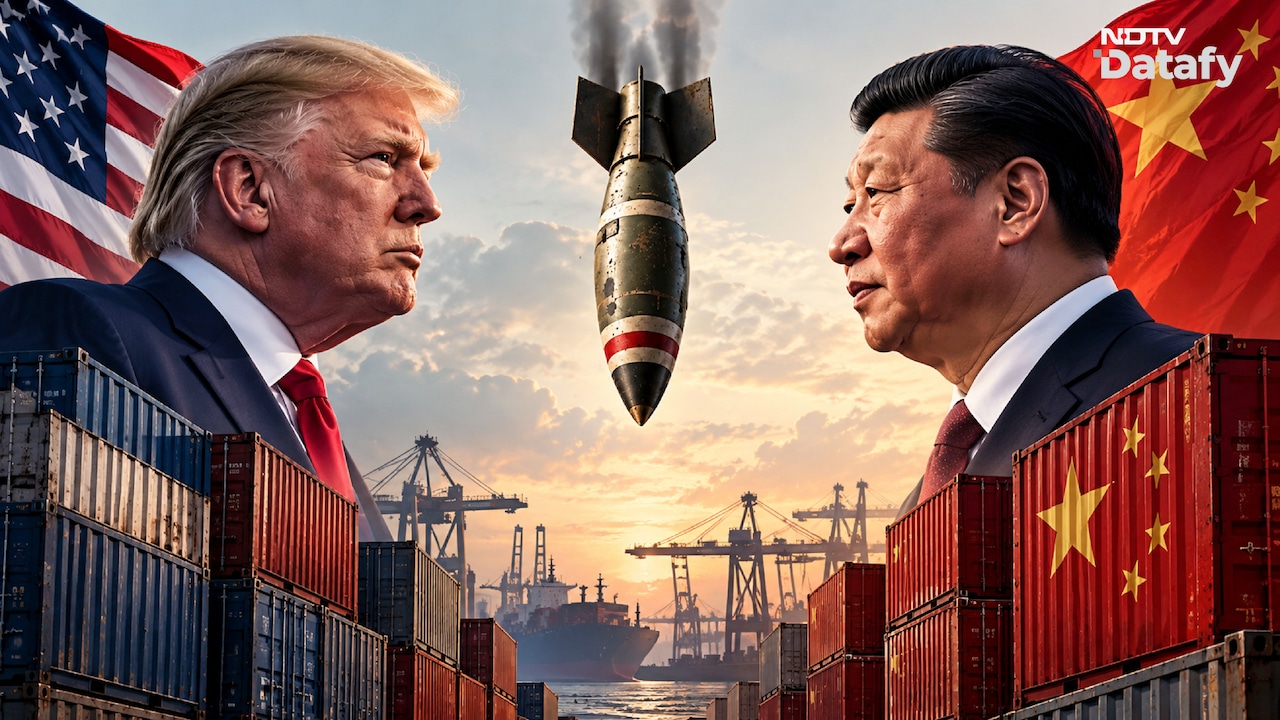
Wars don't just drain blood; they drain bank accounts at a terrifying speed. Right now, the ongoing conflict with Iran is bleeding billions from the US treasury while hitting everyday American households hard at the gas pump. Washington is hunting for an exit ramp, and surprisingly, the steering wheel might be in Beijing.
When Donald Trump and Xi Jinping sit down at the White House, the agenda won't just cover trade disputes or tech restrictions. The shadow of the Middle East hangs heavily over the talks. Beijing isn't firing missiles or moving aircraft carriers into the Gulf, but Chinese economic lifelines keep Tehran's war machine funded. If Washington wants to stop the bleeding, it has to convince Beijing to pull the plug.
The Staggering Financial Toll on Washington
Military budgets are ballooning. According to Congressional Budget Office estimates, US operations related to the Iran conflict hit $43.6 billion. Monthly expenses range anywhere from $2 billion during quiet weeks to $3 billion when fighting spikes. These numbers cover basic warfighting realities: replacing expended interceptors, repairing combat-damaged equipment, ramping up flight hours, and absorbing massive spikes in fuel costs.
American households feel this drain directly. Since the conflict escalated, annual gasoline inflation in the United States has hovered between 18 and 41 percent. Pumping gas shouldn't feel like a luxury tax, yet disruptions around the Strait of Hormuz have choked global energy supplies. The financial pain extends far beyond the Pentagon, creating a domestic political headache that white-collar advisors can't ignore.
Why Beijing Holds the Key to Tehran's Economy
How does a heavily sanctioned nation sustain a high-intensity modern conflict without collapsing? The answer sits in East Asia. China remains Iran's primary economic anchor, swallowing roughly 90 percent of Iranian oil exports.
Data from the US-China Economic and Security Review Commission paints a clear picture. Oil sales tied directly to China make up about 45 percent of Tehran's government budget. In practical terms, Iran pulled in over $31 billion from oil sales to China, pushing total bilateral trade past $41 billion. Furthermore, long-term investment pledges and a web of intermediary firms, front companies, and shadow fleet tankers help Tehran evade international penalties.
Beijing provides the financial oxygen that keeps the Iranian state afloat. Without Chinese oil revenue, Tehran's capacity to finance proxy networks and sustain prolonged hostilities shrinks drastically. That reality turns the White House summit into a high-stakes geopolitical barter.
The Economic Paradox of US-China Interdependence
Pressuring Beijing isn't simple. Washington spent years trying to decouple supply chains and reduce reliance on Chinese manufacturing, yet economic ties refuse to snap. Recent trade data from the US Census Bureau shows the monthly trade deficit with China sitting at $17.36 billion, hitting multi-month highs.
American policymakers face a frustrating paradox. You can't easily demand a major geopolitical favor from a nation that remains deeply wired into your own retail and industrial supply chains. Beijing knows its economic leverage, and Chinese officials have already drawn firm lines regarding sovereignty and tech restrictions.
What Happens Next
Solving a multi-billion-dollar military quagmire requires hard diplomacy rather than wishful thinking. If Washington wants Beijing to squeeze Tehran's oil lifeline, it has to offer concessions or accept that containment comes at a steep recurring price.
Expect the upcoming diplomatic maneuvers to focus heavily on energy flows and sanctions enforcement. If Beijing agrees to scale back its purchases of Iranian crude, the conflict's financial dynamics shift overnight. If not, American taxpayers and drivers will keep footing the bill for a war with no clean end in sight.