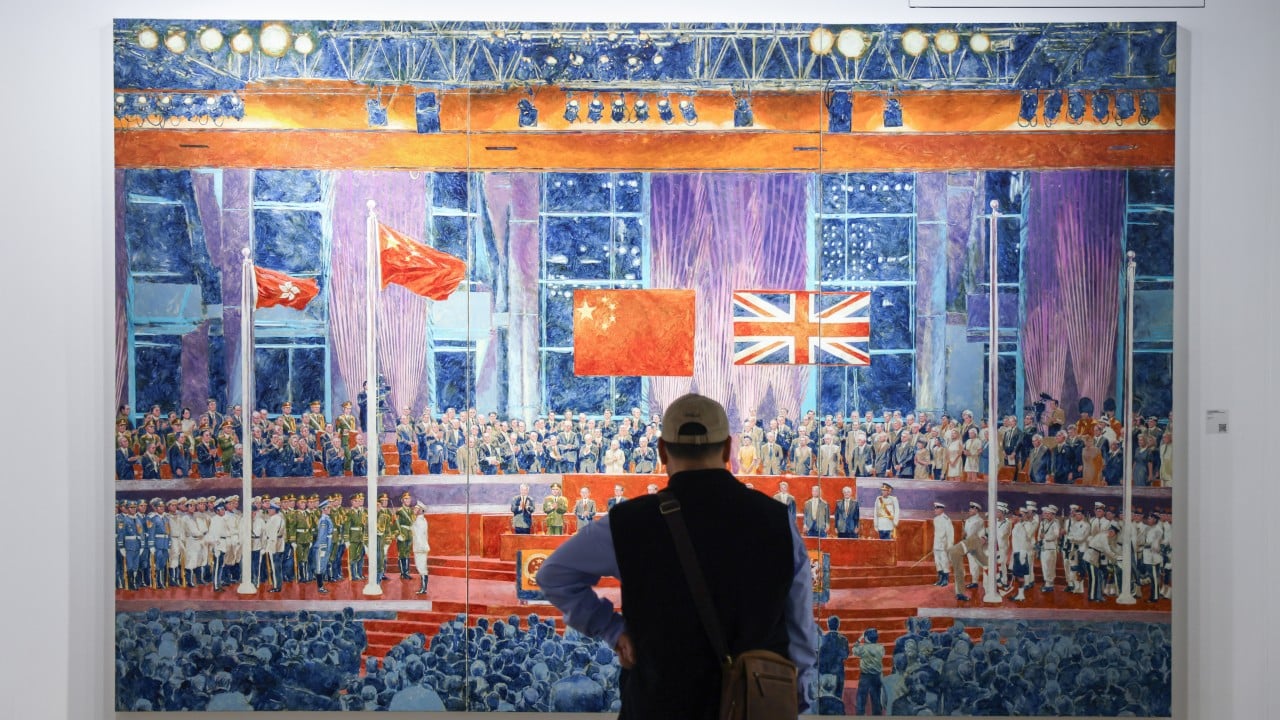
History rarely offers clean answers. Yet when you look at the trajectory of Hong Kong today, you keep running back to its first post-handover leader. Tung Chee hwa passed away at 89, leaving behind a city still wrestling with the exact blueprints he drew up decades ago. If you want to decode where Hong Kong is heading next, you have to look at the shipping tycoon who stepped out of the corporate boardroom and into an administrative hurricane.
Most analysts treat Tung's tenure from 1997 to 2005 as a string of unmitigated missteps. That lazy narrative misses the point entirely. He did not fail because he lacked vision. He failed because his vision arrived twenty years too early, crashing straight into an economic and political reality that wasn't ready to bend.
The Cost of Structural Foresight
When British colonial rule ended, Hong Kong operated on a comfortable autopilot. Speculative real estate, financial intermediation, and laissez-faire complacency defined the local economy. Tung recognized this trap immediately. He knew a city relying solely on property bubbles and paper wealth wouldn't survive the long haul.
So what did he do? He tried to force a complete industrial reinvention.
He championed the creation of Cyberport and the Hong Kong Science Park. He wanted biotech, deep tech, and a knowledge economy. He pushed for infrastructure like the West Kowloon Cultural District and landed Hong Kong Disneyland to anchor modern tourism. He even floated a "Chinese Medicine Port" to carve out a specialized global niche.
Yet these grand ambitions collided with an entrenched civil service and a public addicted to quick property gains. When he set a target of building 85,000 housing units a year to crush runaway home prices, the Asian Financial Crisis struck. Property values plummeted. Homeowners plunged into negative equity. The political backlash was swift, brutal, and relentless.
The Politics of Execution Versus Strategy
Tung had the macro instincts of a master chess player, but his tactical execution often stalled. He came from a corporate dynasty, not a democratic parliament or a grassroots political machine. He expected things to run smoothly through sheer administrative will.
When the SARS epidemic hit in 2003, claiming nearly 300 lives, and subsequent friction erupted over national security legislation under Article 23, the pressure became insurmountable. He resigned in 2005 before finishing his second term. People cheered his exit at the time.
Look at those exact same policies today. Every single one of them has been vindicated by time.
Hong Kong's modern push for innovation and technology is built directly on the foundations of the Cyberport and Science Park projects he fought to establish. The desperate, ongoing scramble to supply affordable housing proves his controversial 85,000-unit target wasn't a reckless mistake—it was an urgent necessity. The legal frameworks for national security that caused uproar back then are now deeply embedded realities of the local legislative landscape.
Lessons for the Road Ahead
What does this mean for the city's future?
Hong Kong is once again reinventing its identity. It is pivoting hard toward the Greater Bay Area integration, tech incubation, and a tighter economic embrace with mainland hubs like Shenzhen. Critics still complain about growing pains, regulatory shifts, and the erosion of old margins.
They are making the same error observers made in 1998. They are confusing short-term adjustment pains with long-term structural inevitability.
Tung once famously reassured a nervous public by stating, "If Hong Kong is good, China will be good. If China is good, Hong Kong will be even better." That phrase was scrutinized globally during a delicate handover. Decades later, that feedback loop between local viability and national alignment dictates every major economic play in the territory.
If you study Tung's era, you stop viewing current headlines as sudden surprises. You see them as the slow, grinding echoes of decisions made thirty years ago. Long-term structural shifts always look messy while they are happening. Stop looking at the daily noise. Look at the blueprints.