Donald Trump never does anything quietly. When he recently took to social media to show off a newly constructed, multi-million-dollar black and white granite helipad on the South Lawn, he didn't just share a picture. He declared that his renovations had transformed the executive mansion into a "palace."
That single word choice lit a fire across Washington.
For critics, the palace comment isn't just standard hyperbole from a former real estate developer obsessed with gold leaf and marble. It’s a direct confirmation of what they've feared during his second term: an executive branch sliding away from public accountability and toward authoritarian pageantry.
What Actually Changed on the South Lawn
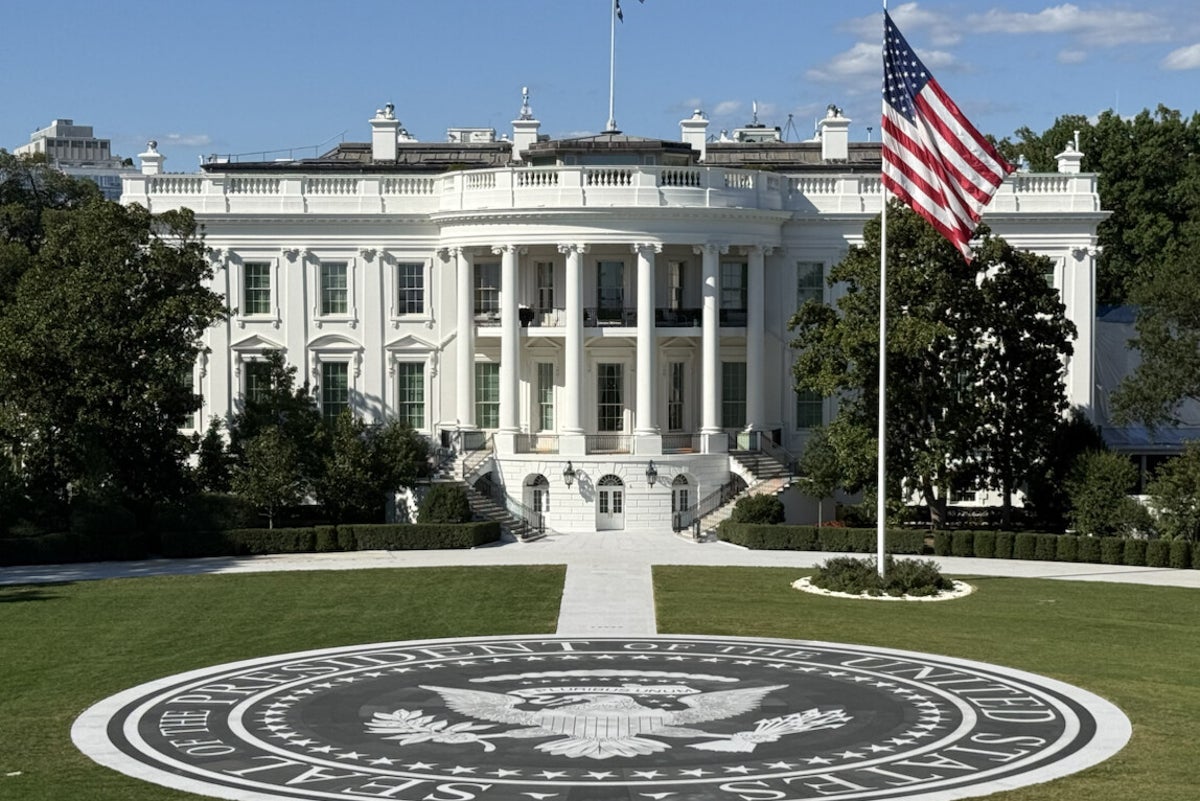
The newly unveiled helicopter landing zone is built from heavy-duty black and white granite, designed to resemble the presidential seal. Trump didn't hide the price tag, calling it expensive while insisting it functions as a "gift to America."
According to administration statements, the funding source behind the multi-million dollar installation comes from defense contractor contributions rather than direct federal appropriations, echoing how Trump has handled several high-profile construction efforts across the capital.
The helipad itself solves a practical problem for the White House fleet, but the aesthetic choices tell a different story. For years, Marine One landings tore up the historic grass of the South Lawn, leaving muddy ruts. Instead of traditional turf reinforcement, the administration opted for a permanent paved plaza that looks more suited for a private corporate headquarters than a historic national park.
The Broader Blueprint of White House Modifications
The helipad is just one piece of a massive aesthetic overhaul. Since returning to office, Trump has systematically altered the historic fabric of 1600 Pennsylvania Avenue.
- The Oval Office features heavy gold drapes and accents.
- Parts of the historic Rose Garden received a paved patio overhaul.
- The Palm Room has been fitted with new marble finishes.
- Plans for a massive, gilded ballroom continue to move forward despite legal challenges and a reported price tag that independent media outlets estimate could soar past hundreds of millions of dollars.
To supporters, these changes represent long-overdue upgrades to a building that they claim was allowed to fall into a state of neglect. To preservationists and political opponents, it is an aggressive erasure of public architectural history in favor of private luxury branding.
Why the "Palace" Rhetoric Strikes a Nerve
Words matter in politics, especially when symbolism is tied to executive power. Calling the official residence a palace directly clashes with the foundational American concept of "The People's House."
When an elected leader frames their temporary residence as a royal estate, it feeds directly into the "No Kings" counter-movement organized by progressive activists. Protesters across the country have spent months pushing back against what they view as an expanding executive footprint, citing everything from aggressive immigration enforcement to costly public works projects as signs of democratic erosion.
History shows that American presidents are merely temporary tenants. George Washington helped design the structure to project republican simplicity, deliberately avoiding the grand European palaces inhabited by monarchs. Trump’s modern modifications are designed to do the exact opposite: project unyielding personal dominance and permanence.
If you are looking at how modern governance intersects with personal branding, this upgrade is a masterclass in shifting the narrative from policy debates to physical spectacles. Granite and gold make for great social media posts, but they also cement a divisive political legacy written in stone right outside the Oval Office window.