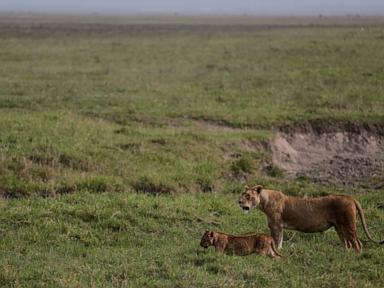
Ten dead lions tell a grim story. Authorities in northern Tanzania confirmed that ten lions were found lifeless on September 18, 2026, in the Ndutu area of the Ngorongoro Conservation Area, with preliminary findings pointing directly to intentional poisoning.
When an entire pride or multiple big cats perish at once, it is rarely an accident. It is usually a symptom of a deeper, bloodier fracture between human survival and wildlife preservation in East Africa.
The Reality of Human Wildlife Conflict in Ngorongoro
The Ngorongoro Conservation Area is a UNESCO World Heritage Site. It is world-famous for a reason. Elephants, black rhinos, buffaloes, and lions roam freely across breathtaking highland plains and savannahs.
Yet, this ecosystem is unique because it isn't a fenced-off national park. Since 1959, semi-nomadic Maasai pastoralists have lived and raised livestock right alongside dangerous predators.
That fragile coexistence is breaking down. Human populations in the area have exploded from roughly 8,000 residents decades ago to more than 100,000 people today. More people means more cattle, goats, and sheep. More livestock naturally attracts large carnivores looking for an easy meal. When a lion kills a farmer’s cow—which represents their entire livelihood and wealth—retaliation can be swift and lethal.
Poisoning remains a devastatingly efficient tool for retaliation. Instead of tracking a predator, individuals sometimes lace a carcass with toxic chemicals. It wipes out entire groups of animals at once, including scavengers like hyenas and vultures that feed on the same bait.
A Wider Crisis Across East Africa
This tragedy in Tanzania doesn't happen in a vacuum. Cross the border into Kenya, and you find a hauntingly similar pattern. Just last month, authorities launched a high-profile investigation after 18 elephants died in the Amboseli ecosystem from suspected pesticide or chemical poisoning.
While investigators sift through toxicological tests in both countries, the conservation community is sounding alarm bells. According to the International Union for Conservation of Nature (IUCN), lions are classified as vulnerable. Their numbers are on a downward trajectory due to shrinking habitats, disappearing prey, and direct conflict with humans. Tanzania holds a massive share of Africa's wild lion population, making losses like this a heavy blow to the species' future survival.
What Needs to Change Right Now
If conservationists and governments want to stop incidents like the Ndutu poisoning, treating the symptom won't work. Punitive measures and investigations are necessary to find those responsible, but they only address the aftermath.
Real solutions require bridging the economic gap for pastoralists who lose livestock to predators. Fast-response compensation programs, predator-proof livestock bomas, and community-based early warning systems keep both cattle and lions alive. Until local communities feel that a living lion is worth more to their daily survival than a dead one, the cycle of poisoning will continue.
The ten lions of Ndutu are gone. Protecting the next generation requires immediate action on the ground before the plains fall completely silent.