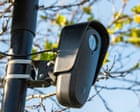
You drive down a public road, and a camera logs your exact location, vehicle make, color, and license plate. Within seconds, that data feeds into a massive, multi-jurisdictional network accessible to law enforcement agencies across state lines. You didn't commit a crime. You weren't pulled over. You just went about your day.
That reality is driving a massive political backlash.
U.S. Representative Greg Steube, a Republican from Florida, introduced federal legislation aiming to halt this unchecked tracking. Known as the Facilitating Liberty and Accountability for Flock Observations Act, or the FLAFO Act, the bill targets automated license plate reader networks like Flock Safety. If passed, it would bar federal agencies from buying, leasing, or accessing these private-vendor databases without first securing a judicial warrant.
The Real Problem With Automated License Plate Readers
Flock Safety dominates the market, operating over 80 percent of the automated license plate reader systems deployed across the United States. Their tech covers thousands of communities through contracts with local police departments, private businesses, and homeowners' associations.
The system processes roughly 20 billion vehicle scans every month. That is an unprecedented scale of data collection.
Law enforcement agencies love these tools because they solve crimes quickly. They help track stolen vehicles, locate missing persons, and piece together getaway routes after violent felonies occur.
Here is the rub. The same database that tracks a fleeing suspect also maps the daily routines of millions of law-abiding citizens. It logs where you worship, who you visit, and where you work.
Why Warrants Matter Now
When technology outpaces constitutional safeguards, abuse follows. Steube's legislative push didn't happen in a vacuum. It arrived on the heels of repeated local scandals where police officers abused database access for personal surveillance.
In Florida, a Sarasota police officer was arrested after internal investigations revealed he used police databases and Flock infrastructure to track a single license plate over 350 times outside of any official investigation. Another officer in Haines City faced similar charges for tracking an estranged spouse. A police chief in Kansas reportedly used the system hundreds of times to stalk an ex-girlfriend.
These aren't hypothetical privacy risks. They are documented breaches of public trust.
The FLAFO Act introduces severe penalties to stop this behavior. Anyone who knowingly accesses or supplies database records outside the law could face up to five years in prison and civil fines reaching 100,000 dollars. Crucially, the bill strips away qualified immunity defenses for unauthorized database snooping.
What The Bill Actually Changes
If you expect an outright ban, think again. The legislation carves out specific, narrow exceptions.
Federal investigators can bypass the warrant requirement during immediate emergencies involving missing persons, imminent threats to human life, or active national security threats like foreign espionage and terrorism. Agencies like the U.S. Secret Service and Customs and Border Protection retain operational carve-outs.
Beyond direct federal limits, the bill uses financial leverage. It ties Department of Justice grant funding for state and local police departments to whether those jurisdictions adopt similar privacy regulations.
States are already taking matters into their own hands. In Florida, the Department of Transportation ordered the removal of all automated license plate readers from state highway rights-of-way, revoking permits statewide after Governor Ron DeSantis made it clear he opposes turning the state into a surveillance grid.
Meanwhile, Congress is seeing a broader wave of pushback. Lawmakers introduced bipartisan measures like the No FLOCK Act, which seeks to dock federal transportation funding for states that fail to restrict these camera networks to strict public safety uses.
How To Protect Your Privacy Locally
If your local city council or homeowner association is considering installing these cameras, you don't have to stay quiet.
- Attend municipal budget meetings and demand to see the data-sharing agreements attached to any vendor contract.
- Ask local police departments how long your movement data is stored and who outside the agency can access it.
- Push your representatives to support strict local ordinances requiring warrants for historical data searches.
The Fourth Amendment was designed to prevent general warrants and unwarranted physical tracking. As artificial intelligence and automated optics make mass surveillance cheaper and easier, drawing a hard legal line is the only way to keep public spaces free.
Stop accepting passive tracking as the price of modern safety. Demand a warrant.