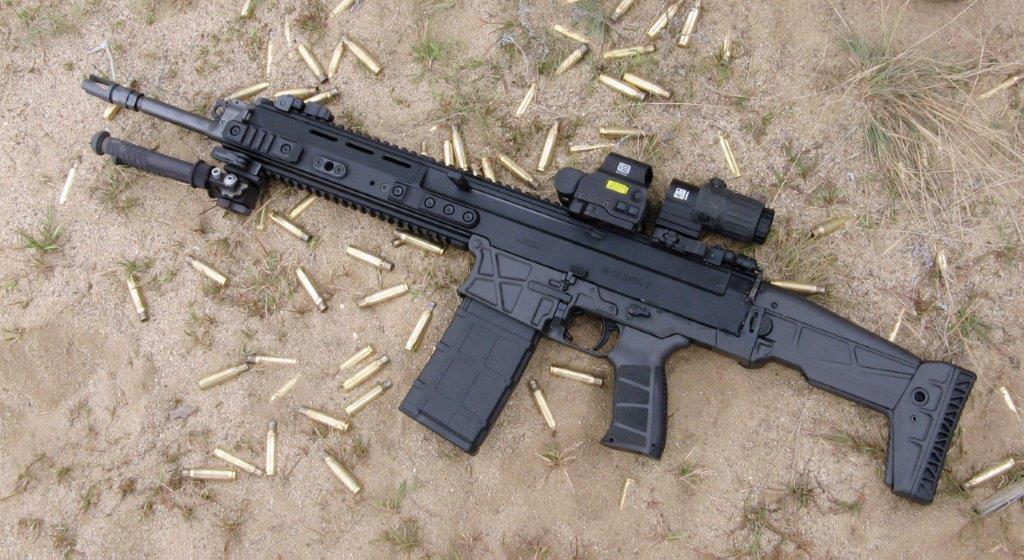
You can't walk into a gun shop today without seeing an AR-15 on the wall. They are everywhere. Roughly 40 million of these rifles sit in American closets and safes, making them arguably the most popular rifle in the country. Yet, if you live in states like Connecticut, Illinois, or California, possessing one can make you a criminal.
The legal war over assault weapons bans is reaching its absolute boiling point. The U.S. Supreme Court has agreed to hear a combined challenge in Viramontes v. Cook County and Grant v. Higgins, setting up a monumental showdown over whether state-level bans on semi-automatic rifles can survive under the Second Amendment.
If you want to understand where American gun laws are heading, you have to look past the political noise. You have to look at how lower courts are twisting themselves into knots over history, tradition, and modern hardware.
The Bruen Standard and the Lower Court Mess
Back in 2022, the Supreme Court handed down its decision in New York State Rifle & Pistol Association v. Bruen. That ruling changed the game by demanding that any modern firearm restriction must align with the nation's historical tradition of gun regulation.
Lower courts have struggled immensely with that mandate. When challenges hit the federal appeals courts regarding assault weapons, judges took wildly different paths. The Second Circuit upheld Connecticut’s post-Sandy Hook ban, arguing that these firearms fit the historical bucket of "dangerous and unusual" weapons. Meanwhile, the Seventh Circuit took a different route to protect Cook County's ban, calling the rifles too close to military gear to warrant constitutional protection.
Legal scholars note that this split is precisely why the Supreme Court stepped in. You have roughly a dozen states enforcing some form of a ban or severe restriction on semi-automatic rifles, and federal circuits are split on the application of the history test.
The Core Arguments Driving the Litigation
Challengers to these bans keep pushing a straightforward point. They argue that the Second Amendment protects arms in common use for lawful purposes. When a single rifle platform outnumbers many popular commercial trucks in America, it's tough to argue it isn't in common use.
On the flip side, state defenders and public safety advocates point to the devastation caused by mass shooters utilizing high-capacity semi-automatic rifles. They argue that these platforms are designed for rapid, offensive combat output rather than traditional self-defense in the home.
Data from the 2026 National Firearms Survey estimates that roughly 88 million American adults own a staggering 461 million firearms. That massive saturation changes how courts view "common use." When tens of millions of citizens own a specific category of firearm, banning it creates a massive constitutional collision.
What Happens If the Supreme Court Strikes Down the Bans?
If the high court rules against these bans, the ripple effects will hit immediately. Laws across a dozen states and multiple major municipalities will instantly face existential threats. States that spent years crafting restrictions on rifle configurations and magazine capacities will find their legislative work wiped out overnight.
We've already seen how sudden shifts in federal policy play out. For instance, when the Department of Justice recently concluded that federal bans on handgun sales to 18-to-20-year-olds violate the Second Amendment, state-level restrictions like Washington's Initiative 1639 remained live flashpoints because state laws still enforce their own age limits. The interplay between federal opinions, Supreme Court rulings, and state enforcement is messy, confusing, and constantly shifting.
Expect oral arguments to draw massive national attention as the justices grapple with where the modern Second Amendment draws the line. If you own these firearms, or if you live in a restricted state, keep a close eye on the docket. This ruling will define the legal boundaries of gun ownership for a generation.