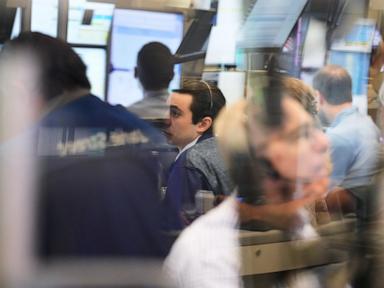
Markets hate uncertainty, but right now they love chips more. If you watch global trading desks, you'll notice a strange tug-of-war playing out across international indices. Investors are caught between a massive, unstoppable wave of artificial intelligence hype and the heavy, grim reality of the ongoing war in Iran.
The result? A deeply divided market where tech momentum keeps fighting off geopolitical panic.
Tokyo's Nikkei 225 recently jumped 3.3% to close at 68,956.72, and South Korea's Kospi edged up 2.0% to reach 6,971.35. Meanwhile, European benchmarks like France's CAC 40 and Germany's DAX took hits, sliding over 1% in early trading. Why the stark contrast? Asian markets are heavily anchored to semiconductor manufacturing and hardware supply chains, meaning any surge in artificial intelligence spending hits their balance sheets first.
The AI Engine Versus Crude Realities
You cannot understand today's market behavior without looking at how tech hardware dominates modern capital flows. When a major chipmaker or electronic supplier posts heavy gains, index funds follow. Traders are betting billions that corporate infrastructure spending on artificial intelligence won't slow down, regardless of macroeconomic friction.
Yet, oil tells a totally different story.
Benchmark U.S. crude recently pushed past $92 a barrel, while Brent crude crossed the $100 mark. These spikes aren't random. They stem directly from wild swings in energy trading tied to the war with Iran and lingering fears over the flow of crude through the Strait of Hormuz. Iranian officials recently acknowledged receiving an official U.S. response to proposals aimed at ending the seven-month conflict, but Washington has pushed back hard against reopening demands made by Tehran.
When energy costs climb, manufacturing margins shrink. That is why indices in resource-importing economies or regions sensitive to European supply chains are feeling the squeeze. European stocks dropped significantly as investors worried about imported energy inflation.
What the Tankan Survey Tells Us About Japan
Beneath the flashy headlines about semiconductor rallies, fundamental economic data gives us a clearer picture of regional health. Take Japan's quarterly tankan survey, a closely watched indicator of corporate sentiment.
The survey revealed that large manufacturers' sentiment improved for the sixth consecutive quarter. That is a quiet sign of domestic resilience. Businesses are adapting to higher input costs and shifting supply lines. However, currency markets are telling a separate story.
The U.S. dollar climbed to 158.28 Japanese yen, continuing a long trend of yen weakness that stubbornly persists even when domestic business metrics tick upward. For anyone trading currencies, this persistent gap highlights how global monetary policy and interest rate differentials continue to override local economic improvements.
Navigating Volatility in a Split Market
If you are trying to manage a portfolio right now, the temptation to chase tech rallies is high. Artificial intelligence is generating real corporate revenue for major hardware providers, but the downside risk is equally real.
Here is what you need to keep in mind when navigating this environment:
- Separate sentiment from supply chains: Don't assume a booming tech stock means the broader regional economy is healthy. Look closely at whether a company relies heavily on imported energy or stable shipping lanes.
- Watch the Strait of Hormuz: Oil prices are the ultimate wild card. If geopolitical talks break down completely and crude spikes further, even the strongest semiconductor stocks will face downward pressure from macro panic.
- Factor in currency drag: A weak local currency can distort returns if you are holding international assets. Always account for exchange rate shifts before making big moves across borders.
Markets will continue to wobble as long as the Middle East conflict remains unresolved. Technology optimism provides a powerful floor for stocks, but it isn't bulletproof. Keep your risk tightly managed, watch the energy sector closely, and don't let short-term AI hype blind you to underlying geopolitical costs.


:max_bytes(150000):strip_icc()/2445301_beste_022_0-eae0c6e7188b4581b79740fd9782b60f.jpg)