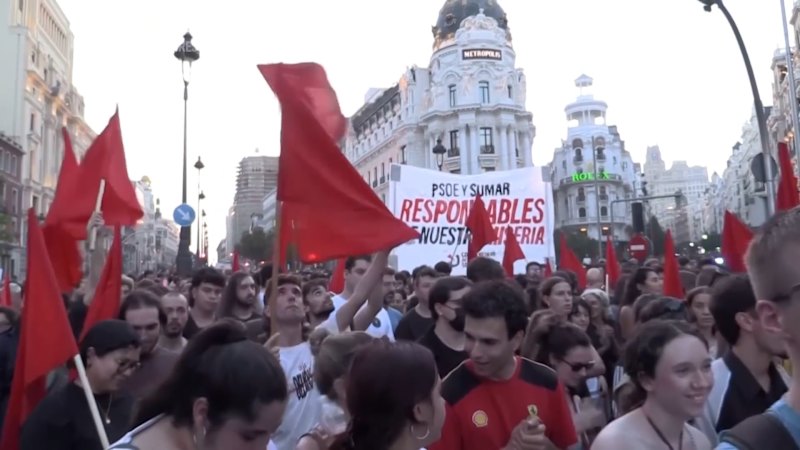
Tens of thousands of angry residents flooded the streets of Madrid, demanding immediate action as Spain's housing crisis spirals completely out of control. When an 87-year-old woman was dragged from the Madrid apartment she called home for decades, it triggered a massive cultural and political shockwave. People aren't just annoyed anymore. They are furious.
If you've been watching European real estate, you know this pressure cooker has been building for years. Skyrocketing rents, rampant short-term tourist rentals, and stagnant local wages have combined to push everyday citizens right out of the property market. Let's look at what's actually driving these demonstrations and why experts say the Spanish housing market is standing on the edge of a cliff.
The Breaking Point That Sparked the Madrid Marches
The immediate catalyst for the mass mobilization was heartbreakingly brutal. An octogenarian tenant, who had lived in her apartment for decades under older rental agreements, was forced out onto the street. For a country already grappling with deep-seated anxiety over housing security, this single eviction felt deeply symbolic. It exposed the stark vulnerability of ordinary tenants facing aggressive property speculation and archaic legal loopholes.
Protesters didn't just chant slogans. They presented concrete demands to lawmakers:
- Stricter anti-fraud measures against predatory landlords.
- Comprehensive tenant protection laws that apply nationwide.
- An absolute ban on evictions when local authorities fail to provide alternative public housing.
Politicians have traded blame for years, but the streets are sending a clear message. Citizens are done waiting for bureaucratic reform.
Why Spain's Rental Market is Broken Beyond Repair
To understand why thousands are marching, look at the numbers. Rental prices in major hubs like Madrid, Barcelona, and tourist hotspots have surged past what average working-class families can afford. When a hospitality worker or a teacher spends over half their monthly paycheck just to keep a roof over their head, the economic model is fundamentally broken.
Tourism plays a massive role here. Thousands of residential apartments that used to house long-term locals have been converted into short-term vacation rentals. Landlords make more money in a weekend catering to holidaymakers than they do renting to a family for a month. Local communities are hollowed out, replaced by rotating doors of tourists while residents sleep in cars or move back in with aging parents.
The Political Fallout and What Happens Next
The Spanish government finds itself in a corner. Prime Minister Pedro Sánchez’s administration has previously promised thousands of affordable public housing units, but the rollout moves at a snail's pace compared to the blistering speed of market gentrification.
Critics argue that half-measures and rent caps have backfired, driving supply down even further as hesitant landlords pull their properties off the market entirely. Meanwhile, grassroots tenant unions are organizing legal defense networks to physically block evictions block by block.
If you're tracking urban economics, Spain's current trajectory offers a grim warning for other global cities facing the exact same affordability crunch. When housing becomes an exclusive playground for global capital rather than a basic human necessity, social unrest is the inevitable result.
The protests in Madrid are just the beginning. Until concrete, enforceable protections are put in place to prioritize people over profit, the streets will stay hot.