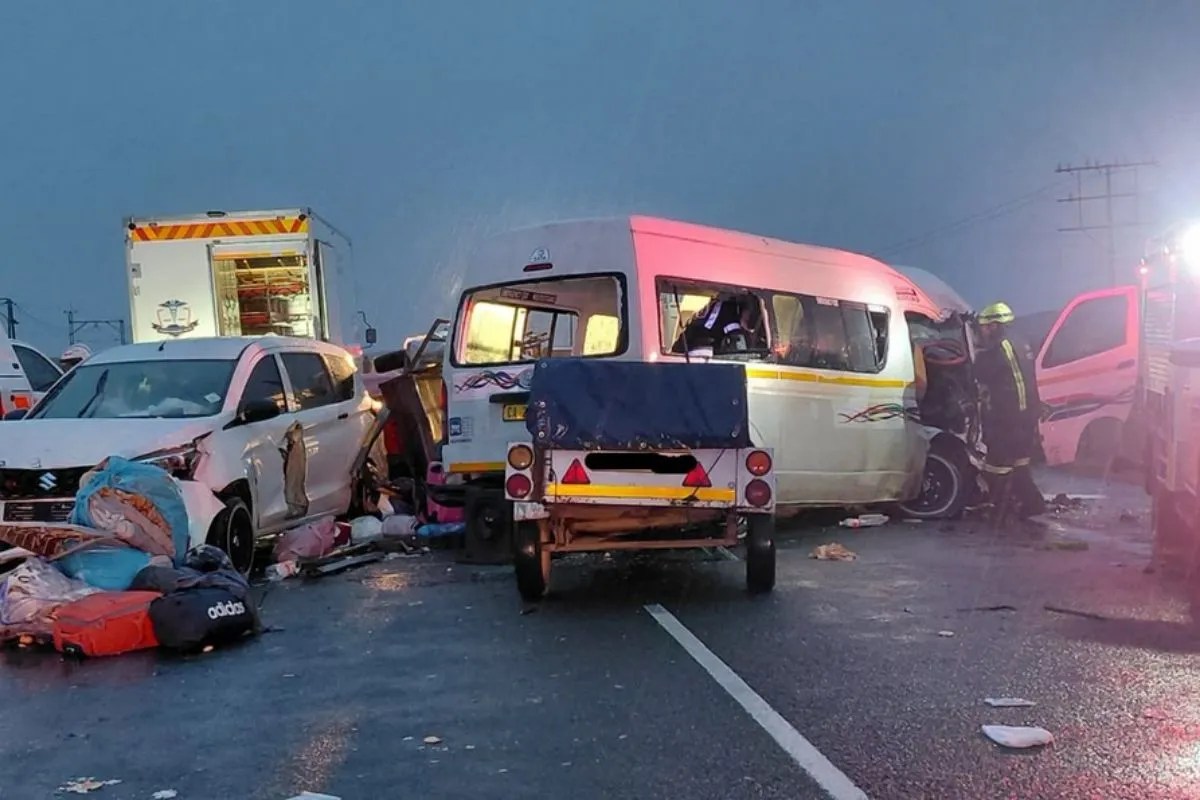
Twenty-one lives vanished in a matter of seconds on a quiet stretch of the N1 highway in South Africa. When two minibus taxis collided head-on, followed instantly by an SUV ramming into the tangled wreckage, the tragedy wasn't just an isolated stroke of bad luck. It laid bare a persistent, systemic crisis on national transport corridors that authorities struggle to control.
The horrific accident unfolded late Sunday night between the small towns of Prince Albert and Leeu-Gamka in the Western Cape province, roughly 380 kilometers east of Cape Town. According to the Road Traffic Management Corporation and local mobility departments, three of the victims were rushed to a hospital only to be declared dead on arrival. Four others sustained severe injuries, and emergency services warned that the final death toll might still climb as site assessments continued.
The Lifeline That Turns Into a Death Trap
Minibus taxis aren't just vehicles in South Africa. They are the absolute backbone of public transport, moving millions of everyday workers and families across vast distances where formal rail or bus networks fall short. But reliance on this informal transit sector comes with a heavy human cost.
If you look closely at national safety records, this crash is part of a grim, recurring pattern. Earlier this year in January, two separate collisions involving minibus taxis wiped out at least 25 lives, including 14 children. High speeds, long driving hours, vehicle overloading, and challenging highway conditions create a constant hazard on major routes like the N1.
What Authorities Are Doing and Where It Falls Short
Following the Western Cape collision, the N1 highway was immediately shut down in both directions, forcing traffic onto lengthy detours via the R407 and N12 through Beaufort West. The Road Traffic Management Corporation launched a full-scale investigation to determine the exact sequence of events and liability.
Yet, temporary road closures and post-accident inquiries rarely fix the root causes. Transport analysts have long argued that regulatory oversight of long-distance minibus transit remains fragmented. Drivers often face intense economic pressure to complete multiple trips per day, leading to fatigue and reckless overtaking on single-carriageway national roads.
Moving Beyond Shock to Systemic Reform
Every time a multi-vehicle disaster makes international headlines, public outrage flares up for a few days before fading away. Real change requires stringent vehicle roadworthiness testing, mandatory rest periods for commercial taxi drivers, and accelerated upgrades to major freight and passenger corridors.
Until structural safety measures are rigorously enforced across the board, families traveling across the Western Cape and beyond will continue to bear the risk of infrastructure and transit vulnerabilities. The N1 highway crash stands as a stark reminder that public transport safety reform cannot wait for the next catastrophe.