When international media reports on a mass shooting, people usually picture a lone, deeply troubled individual opening fire in a school, a shopping mall, or a suburban office building. That profile matches a specific pattern often seen in the United States and other Western nations, where attackers frequently act out personal grievances or ideological hatreds.
Look at South Africa, and you will see an entirely different reality.
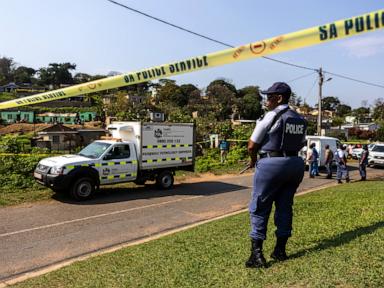
Recent bloodshed—such as the devastating weekend massacres in townships near Johannesburg and Cape Town that left dozens dead—reveals a starkly different dynamic. These aren't isolated gunmen seeking twisted notoriety. They are militarized squads executing calculated hits. Understanding this distinction is vital if you want to grasp why standard global gun control arguments often miss the mark on African soil.
Organized Crime Trumps Ideology
In South Africa, mass shootings are overwhelmingly tied to organized crime syndicates, turf wars, and territorial control.
When eight armed suspects wielding AK-47 assault rifles and pistols storm a neighborhood bar in Wedela township, they aren't driven by psychological manifesto or political radicalism. They are enforcing a business model. Police investigations frequently point toward lucrative illicit markets: illegal gold mining syndicates fighting over abandoned shafts around Gauteng, drug trafficking rings battling in Cape Town, or violent extortion rackets dominating impoverished neighborhoods.
Unlike lone actors who plan attacks in secrecy, these groups operate with brazen coordination. They roll up in minibuses, systematically clear rooms, and vanish into the night. It's contract violence on a mass scale.
The Geography of Inequality
Geography dictates vulnerability here. South Africa’s extreme economic inequality creates distinct zones of safety and danger.
Affluent suburbs sit mere miles away from impoverished townships, yet they inhabit entirely different worlds. Wealthy neighborhoods feature private armed security, gated access, high walls, and constant patrol lights. Meanwhile, townships suffer from structural neglect. Poorly lit streets, long response times, and an immense distance from heavily staffed police stations make dense informal settlements sitting ducks for heavily armed gangs.
When criminal groups want to send a message or eliminate rivals, they strike where state security is weakest. The victims are rarely targets of personal vendettas; they are ordinary patrons sitting in local taverns or attending neighborhood gatherings. Innocent bystanders, including young children, routinely get caught in the crossfire of these territorial disputes.
Why the Response Has Shifted
The sheer volume of military-grade hardware moving through these communities has forced radical government intervention.
South Africa records tens of thousands of homicides annually, giving it some of the highest gun-related murder rates in the world. The proliferation of illegal firearms—many smuggled across borders or stolen from official stockpiles—means criminal groups outgun local police departments.
Recognizing that ordinary law enforcement was losing ground against organized syndicates, the government deployed the national army to support high-risk police operations. Soldiers patrol volatile districts in ongoing missions designed to crack down on violent gangs. Yet, shutting down illegal taverns and seizing assault rifles only scratches the surface of an economy deeply fractured by poverty and unemployment.
Stop looking at global gun violence through a single lens. Until policymakers address the underlying syndicate economies and structural inequalities fueling these coordinated attacks, the bloodshed in South Africa's townships will continue unchecked.
Separate mass shootings in South Africa townships leave at least 27 people dead
This video provides an on-the-ground report regarding the multi-gunman massacres in South African townships and the ongoing police response to organized criminal violence.
http://googleusercontent.com/youtube_content/1