Rising oceans aren't an immediate existential crisis for mainland China's geography. But the global debate over shrinking coastlines and maritime boundaries has become an unexpected focal point for Beijing's diplomatic strategy.
If you look past the headlines about carbon emissions, a much quieter legal battle is unfolding across international bodies. Nations with vanishing shorelines are fighting to preserve their maritime zones, exclusive economic zones, and sovereign rights, even if their physical landmass disappears underwater. Beijing is watching this shift closely because maritime law dictates global trade, naval mobility, and resource access.
The Legal Fiction of Permanent Boundaries
Maritime law rests on a very old, land-centric assumption. Under the United Nations Convention on the Law of the Sea, a country's maritime claims are anchored to its physical coastlines.
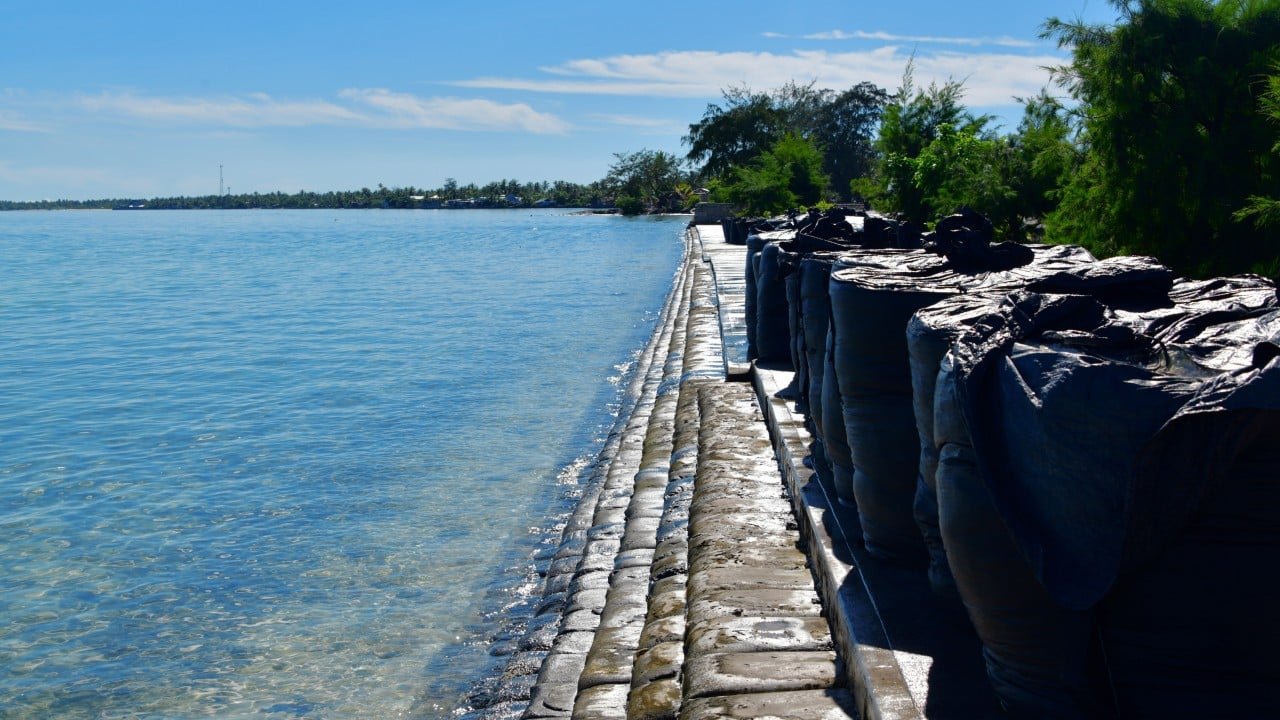
When those coasts erode or slip beneath the waves, the math changes. Low-lying island nations in the Pacific face a grim reality. Their actual land is shrinking. If their legal rights shrink with it, they lose control over massive ocean territories rich in fisheries and minerals.
To prevent this, several vulnerable states are pushing for a new legal consensus. They want maritime baselines to remain fixed permanently, regardless of physical erosion.
Beijing has entered this conversation with a calculated approach. China relies heavily on stable international norms to protect its own vast maritime claims, particularly in regional seas. Yet, Beijing also cultivates deep economic and diplomatic ties with Pacific island nations that are leading the charge for fixed maritime zones. Supporting these nations isn't just about charity or climate solidarity. It’s about building diplomatic influence in regions where Western powers have traditionally held sway.
Why Beijing Cares About Shrinking Coasts
You might wonder why a superpower with massive landmass and advanced engineering capabilities would care about tiny disappearing islands. The answer comes down to global legal precedent.
When international law adapts to accommodate shrinking coastlines, every coastal nation is affected. China's participation in this debate shapes how future disputes over maritime jurisdiction are handled. If fixed baselines become accepted customary international law, it alters the strategic calculus for maritime superpowers everywhere.
At the same time, Beijing uses its infrastructure and climate adaptation aid as diplomatic currency. While Western capitals offer rhetorical support on climate change, Chinese state firms often deploy concrete seawalls, port upgrades, and coastal protection projects across developing nations. This hands-on involvement gives Beijing a front-row seat to the practical hurdles of shoreline management.
Navigating Competing Interests
Beijing's stance walks a careful line. On one hand, China wants to avoid setting legal precedents that could complicate its own expansive maritime assertions in the South China Sea. On the other hand, alienating developing coastal states would hand a strategic victory to Washington and its regional allies.
This tension explains why Chinese diplomats engage constructively in international legal forums discussing sea-level rise without locking themselves into rigid positions. They are playing a long game, ensuring that whatever rules emerge do not undermine core national interests while still winning goodwill in the Global South.
Ultimately, the debate over shrinking coastlines is about much more than environmental science. It is a fundamental contest over who writes the rules of the oceans when the physical map of the world starts to change. Keep an eye on how international tribunals handle these baseline disputes over the next few years. That is where the real power will shift.