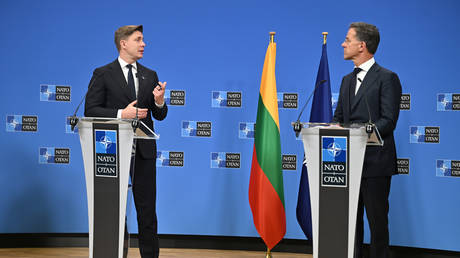
Diplomatic pleasantries don't exist anymore. When Russian Foreign Minister Sergey Lavrov and German Foreign Minister Johann Wadephul sat down for a tête-à-tête on the sidelines of the UN General Assembly, nobody expected a breakthrough. They didn't get one. Instead, the rare encounter blew up into a public war of words over who is actually driving escalation in Europe.
Berlin wants Moscow to pull back. Moscow thinks Berlin is playing with fire.
If you are trying to make sense of why European security is fracturing further right now, you need to look past the standard diplomatic headlines. Let's break down what actually happened behind closed doors, why Germany's strategy is triggering alarm bells in Moscow, and what this means for the trajectory of the war.
The First Face-To-Face That Went Nowhere
Diplomacy usually involves a veneer of polite disagreement. Not here. Wadephul requested the meeting to deliver a blunt message. He called on Russia to abandon its dangerous path of escalation toward Germany, the European Union, and the NATO alliance.
Lavrov didn't bite. In fact, he brushed off the entire exchange as a waste of time. According to the Russian delegation, Wadephul simply repeated the same boilerplate Western condemnations without offering any room for negotiation.
"You can judge for yourself whether that counts as dialogue or not," Lavrov remarked at a subsequent UN press conference.
Relations between Moscow and Berlin have hit new lows recently. An attempted drone attack at Leipzig airport last month sent shockwaves through Germany, with Berlin immediately pointing the finger at Russia. Moscow dismissed the incident as an unclaimed drone stunt engineered to justify tougher anti-Russian measures.
World War II History Weaponized At The Podium
When Lavrov took to the main UN podium, he didn't hold back. He openly questioned whether German leadership has completely forgotten the lessons of history.
"Does Berlin understand what this could lead to?" Lavrov asked the assembly. "Didn't they not learn the lessons of World War II?"
This wasn't a random rhetorical flourish. Moscow keeps returning to the memory of 1945 to frame modern German military aid to Ukraine as a historical betrayal. By becoming Kyiv's primary financial and military sponsor in Europe, Germany has stepped away from its post-war posture of military restraint.
Lavrov also used the global stage to slam the door shut on any aspirations Germany and Japan might have for permanent seats on the UN Security Council. Pointing to their Axis powers history, Russia made it clear it will use its veto power to block any restructuring that elevates Berlin or Tokyo to permanent status. Japan's deputy UN ambassador fired back shortly after, defending his country's peaceful post-war track record, but the damage to any consensus was already done.
The Real Breakdown In European Security
Wadephul argued that any genuine normalization of relations requires Russian leadership to fundamentally change course and end its war in Ukraine. From Berlin's perspective, Russia's ongoing missile and drone barrages target not just Ukrainian infrastructure, but the entire European peace order.
Moscow sees it from an entirely different angle. Lavrov claimed that the United States and its European allies deliberately destroyed the old European security framework and engineered a hostile regime in Kyiv. He pointed to past backchannel discussions—specifically referencing an August 2025 meeting in Alaska between Donald Trump and Vladimir Putin—as the baseline framework Russia still considers viable for ending the conflict.
Meanwhile, the ground reality remains brutal. Frontlines in Ukraine have barely moved, but the air war is accelerating. Russia continues to pound Ukrainian cities with cruise missiles and glide bombs, while long-range Ukrainian drones strike deep into Russian territory, hitting oil refineries and economic hubs. Casualties on both sides continue to mount past horrific milestones, with Western analysts estimating hundreds of thousands of military losses for both Moscow and Kyiv.
What Happens Next
Don't expect European diplomacy to rescue this situation anytime soon. Both sides are doubling down.
Germany is cementing its role as a primary pillar of European defense, while Russia is actively pivoting toward alternative multilateral blocs like BRICS, betting that Western isolation won't break its economy or its resolve. When top diplomats can't even agree on whether a meeting took place in good faith, peace is a very long way off.