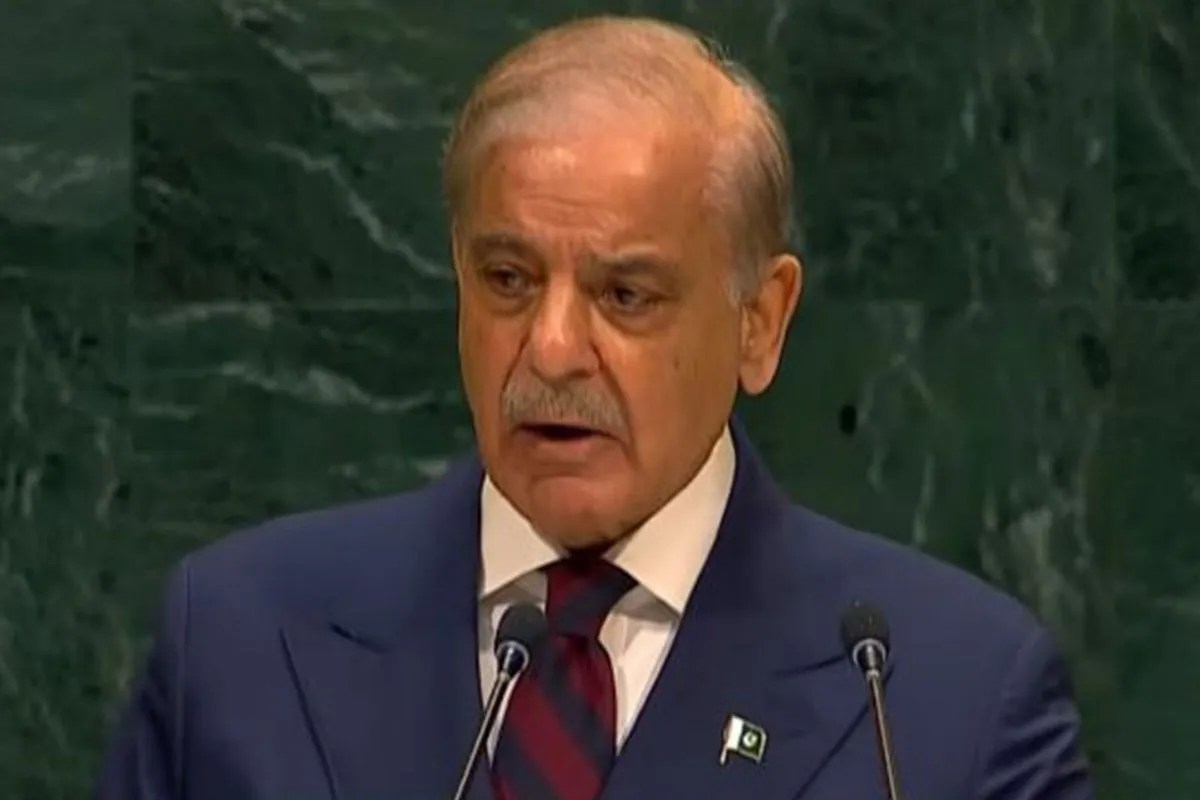
Every single year, world leaders gather in New York for the United Nations General Assembly. And every single year, Islamabad feels the exact same compulsion to talk about Kashmir. Let us be completely honest about what is happening here. It is a predictable diplomatic script. Pakistan Prime Minister Shehbaz Sharif once again used the global stage to push for a plebiscite, framing the Kashmir dispute as an unresolved core issue of international safety. But if you look past the standard rhetorical flourishes, you notice a stark reality. Nobody is biting.
You see, international diplomacy isn't run on emotional speeches anymore. Global powers have shifted their focus to supply chains, technological dominance, economic corridors, and maritime security in the Indo-Pacific. When leaders hear a familiar speech about plebiscites and United Nations Security Council resolutions that are decades old, they nod politely and move on. They don't change foreign policy over it. India's stance remains unyielding, anchored in the view that the region is an internal matter and that cross-border terrorism must stop before any meaningful dialogue can even begin. For a different perspective, read: this related article.
Understanding why this ritual repeats requires looking at domestic political survival. When an administration faces severe economic headwinds, mounting inflation, and internal dissent back home, foreign policy becomes a handy pressure valve. Mentioning Kashmir at the UN plays well to local domestic constituencies. It projects strength. It signals that leadership is fighting for national pride on an international platform. Yet, this strategy comes with a massive blind spot. It ignores the changing geopolitical ground realities that have rendered these speeches largely ineffective outside local political theater.
Let's talk about the actual mechanics of the UN platform. General Assembly speeches allow leaders to address the world, but resolutions passed here are non-binding recommendations. The real power rests in the Security Council, where permanent members hold veto power and global realpolitik dictates actual outcomes. For years, major global capitals have quietly encouraged bilateral engagement between New Delhi and Islamabad under the framework of the Simla Agreement. They refuse to internationalize the dispute because they have too much strategic and economic capital invested in both South Asian nations. Related insight on this matter has been published by Associated Press.
Look at the economic indicators. India is currently the world's fifth-largest economy and marching forward, while Pakistan has spent the last few years jumping from one bailout package to another with the International Monetary Fund. Global investors care about stability, market size, and rule of law. When a country's leadership spends its primary international address fixated on territorial grievances rather than economic integration, trade reform, or regional connectivity, it signals a priorities mismatch. Investors notice this. Neighboring nations notice this.
Another layer to this dynamic is the complete transformation of the ground situation within the Union Territory of Jammu and Kashmir itself. Over the last few years, tourism numbers have shattered previous historical records. Millions of domestic and international visitors walk through the valley, enjoying local hospitality, taking hikes, and experiencing normal daily life. Infrastructure projects like railway networks, highway expansions, and hydro-electric plants are changing physical connectivity. When local populations experience higher footfall, better digital integration, and expanding economic opportunities, the romanticized narrative of constant disruption starts losing its grip on the younger generation.
Of course, critics point out that security measures remain tight and administrative control is heavy. That is true. But the international community weighs these security concerns against the larger threat of regional instability and cross-border infiltration. New Delhi has successfully framed its counter-terrorism narrative around global security standards, making it much harder for Islamabad to gain diplomatic traction on international forums. Western nations, in particular, prioritize intelligence sharing and countering radical extremism over mediating a historical territorial claim.
So what happens when the UNGA curtains close and the delegates fly home? Absolutely nothing changes on the ground. The speeches are archived in UN digital libraries, the headlines fade within forty-eight hours, and both nations return to their heavily fortified borders. It is a sterile diplomatic cycle that wastes valuable time, diplomatic capital, and state resources.
If you are following international relations closely, stop looking at UN speeches for breakthrough moments. Look instead at bilateral backchannels, trade data, water treaty negotiations, and regional security pacts. Those are the real metrics of power and change in South Asia. True statesmanship requires moving past historical grievances to address modern challenges like climate change, poverty, and youth unemployment. Until leadership on all sides realizes that the future matters more than the past, this annual ritual will remain just that—noise without motion.