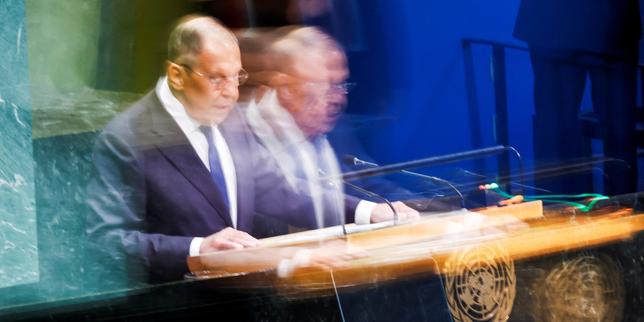
When Russian diplomatic leadership steps up to international microphones, the message rarely leaves room for interpretation. At the United Nations in late September, Foreign Minister Sergei Lavrov laid out a familiar framing, asserting that European capitals are actively undermining potential settlements between Moscow and Kyiv. It is a narrative designed to shift blame, but look past the rhetoric and you find a stark reality. For the Kremlin, peace is not a mutual compromise. It is a demand for absolute capitulation disguised as diplomacy.
If you examine how Moscow defines a negotiation, the terms are straightforward and uncompromising. The official stance requires Ukraine to lay down its arms and abandon sovereign territory before a single conference table is ever set up. You don't negotiate terms when the other side has already surrendered. You simply dictate them. That is the exact trap embedded in current Russian diplomatic posturing.
The Mirage of Open Doors
Moscou loves to point fingers at international actors, claiming that Western allies—particularly European nations—are the ones blocking peace tracks. Lavrov and Kremlin spokesman Dmitry Peskov routinely argue that European governments maintain an inflexible stance, fueling escalation rather than dialogue.
This framing serves a very specific domestic and geopolitical audience. By blaming Europe, Moscow attempts to drive a wedge between Washington and its continental partners. It paints the Russian state as a willing partner pushed into conflict by external interference.
Yet, pointing fingers at European reluctance ignores the core stumbling block. No European capital is forcing the Kremlin to occupy swathes of foreign soil or shell civilian infrastructure. The obstacle to peace isn't European rigidity. It is the absolute refusal in Moscow to accept a sovereign, independent Ukraine that chooses its own alliances.
Breaking Down the Kremlin Playbook
When Russian officials talk about addressing the root causes of the conflict, they are not inviting an open exchange of ideas. They are demanding a rewritten European security architecture that rolls back decades of sovereign choices.
- Preconditions as a Veto: By demanding full demilitarization and territorial concessions upfront, Moscow ensures that talks never actually start.
- Shifting Blame: Accusing Europe of sabotage lets the Kremlin play the victim while keeping its military pressure high on the ground.
- The Zero-Sum Trap: Compromise is treated as weakness, leaving no middle ground for diplomatic maneuvering.
This playbook has barely shifted since the invasion began. Every diplomatic overture from Moscow comes wrapped in ultimatums. They want international recognition of annexed territories and a neutral status enforced from the outside. That isn't a diplomatic compromise. That's a demand for unilateral surrender.
What Real Peace Requires
Real negotiations require both parties to accept that they cannot achieve one hundred percent of their wartime goals through force. Right now, only one side expects the opponent to vanish from the map.
As long as the Kremlin treats survival and sovereignty as negotiable items on a checklist, any talk of peace remains an illusion. You can't bridge a gap when one party insists the other must stop existing first. Stop pretending that words from Moscow signal a shift in intent. They don't. Until the cost of continuing the conflict outweighs the fantasy of total conquest, the terms will remain unchanged.