Diplomacy rarely looks neat. Sometimes it unfolds while one delegation walks out of a General Assembly hall and the other holds up photographs of the dead.
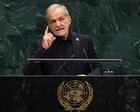
When Iranian President Masoud Pezeshkian stepped up to the United Nations podium in New York, he didn't mince words. He called out Donald Trump directly. He labeled the United States a bully and laid bare the severe human cost of the ongoing conflict, holding up images of victims from the opening days of the war.
Yet, beneath the fiery rhetoric, a distinct signal emerged. Tehran wants a way out.
The immediate question on everyone's mind is simple. Why does a nation under heavy bombardment and crushing economic sanctions signal a willingness to negotiate with the very leader threatening total annihilation?
The answer lies in severe geopolitical pressure and the hard calculus of survival.
The Pressure Behind the Podium
To understand what's happening right now, you have to look at the choke points. The Strait of Hormuz has been intermittently blockaded, sending global energy prices soaring. Tanker traffic has dropped to a trickle, with fewer than five identifiable ships making it through daily.
Meanwhile, secondary sanctions are tightening the screws on everyday life inside Iran. Civilian aircraft face the threat of a global grounding as regional airspace closes under pressure. Foreign currency reserves are drying up.
Pezeshkian knows the domestic stakes. He also knows the United States faces its own political calendar. With midterm elections looming in November, Washington needs relief at the pump and stability in global energy markets. That mutual need created the opening for a quiet, three-hour meeting on the sidelines of the UN assembly between Iran's foreign minister, Abbas Araghchi, and US special envoy Steve Witkoff.
The Cost of Defiance
Talks are happening, but they are fraught with friction. Hardliners back home in Tehran aren't ready to wave a white flag. Figures like Mohsen Rezaei insist that no negotiations can truly progress until hard conditions are met.
Iran has laid down steep demands. They want an end to the naval siege, the cessation of American military actions, the release of frozen assets, and a halt to the broader economic war. Tehran has even floated the idea of reopening the Strait of Hormuz within seven days if these terms are satisfied.
Crucially, any reopening will likely require commercial shipping to navigate through lanes primarily controlled by Iran rather than external actors. That gives Tehran the leverage it desperately craves.
What Happens Next
Diplomatic breakthroughs rarely happen overnight, especially after direct military conflict. The walkout by the US delegation during Pezeshkian's speech proves that bad blood runs deep. Mutual distrust remains the default setting.
Yet, backdoor channels via Qatari mediation are keeping the conversation alive. Both sides understand the alternative is a prolonged economic bleed and the constant threat of renewed escalation.
Watch the shipping data in the Persian Gulf over the coming weeks. If tankers start moving steadily through Iranian-controlled sea lanes, the backroom diplomacy in New York worked. If the blockade tightens, expect the rhetoric to turn much sharper.