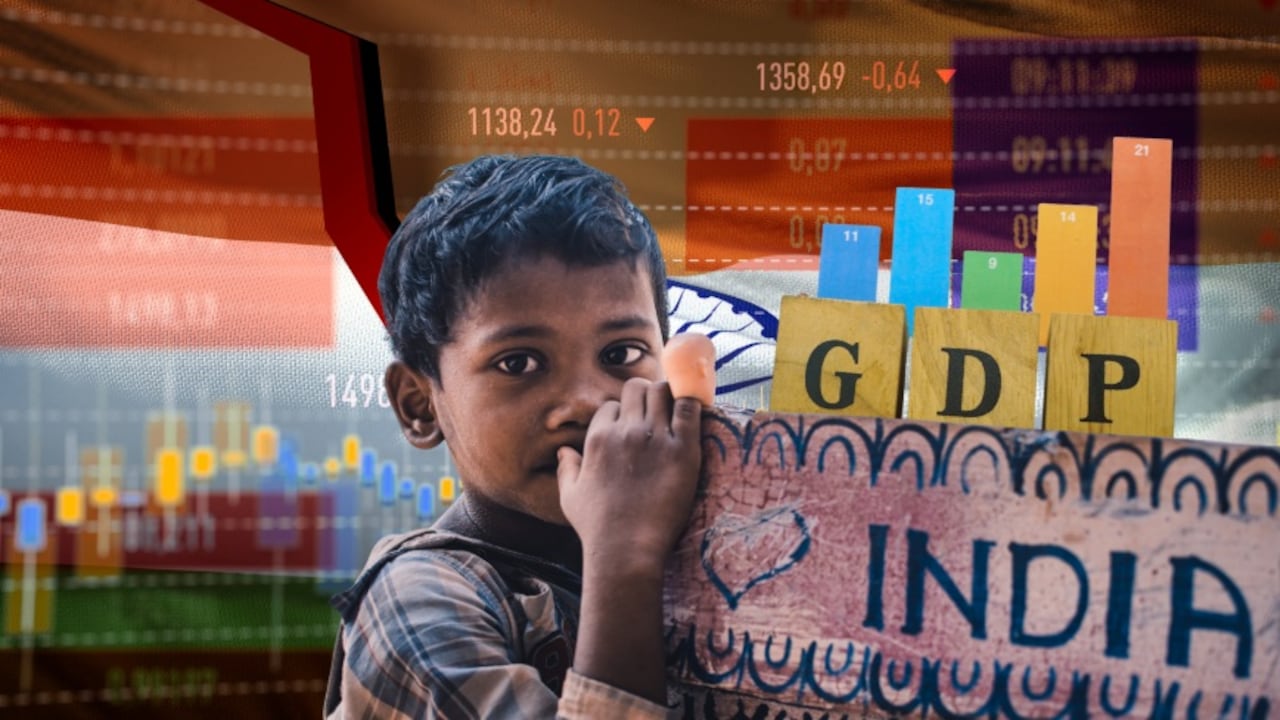
We love quoting big economic numbers until they don't match the reality on the street. When official GDP growth figures claim one thing while local store owners, small business operators, and salaried employees struggle to pay bills, a credibility crisis begins. The ongoing political and economic rows surrounding India's economic metrics aren't just academic arguments for bureaucrats. They touch the core of how citizens measure progress and how investors decide where to put their money.
Numbers have always been flexible tools in the hands of policymakers. You've got the famous quip about lies, damned lies, and statistics, and it feels entirely appropriate whenever macro indicators detach from lived experiences. When baseline data gets revised repeatedly—with quarterly estimates shrinking by trillions of rupees after the fact—trust evaporates. Public relations campaigns can polish an economic presentation, but they can't put cash into the pockets of a squeezed middle class.
The Problem With Constant Revisions
Let's look at what actually happens when baseline numbers shift. In recent economic cycles, major revisions have altered the scale of national output after initial announcements. When estimates for past quarters drop significantly from previous figures, the calculated growth rate starts looking a lot rosier than it should.
Former finance secretary Subhash Chandra Garg pointed out that if you don't adjust the preceding year's figures downward, current growth percentages look vastly different. That's not a minor accounting detail. It changes the entire narrative of economic health. If your denominator shrinks, your growth percentage gets an artificial lift.
Investors hate surprises, but they hate uncertainty even more. When financial institutions and foreign funds try to assess India's trajectory, they rely on transparent data. If methodology keeps changing or data releases face mounting criticism from former policymakers and independent economists, confidence takes a direct hit. You can't market an economic powerhouse while arguing over basic arithmetic.
Macro Numbers Versus Main Street Reality
Go talk to anyone running a small manufacturing unit or a retail shop in Tier-2 cities. They aren't celebrating abstract double-digit expansions. They're dealing with flatlining consumer demand, rising input costs, and tight credit conditions.
The real economy is split down the middle. Large corporations with access to cheap capital and formal banking are doing fine. Meanwhile, the informal sector—which absorbs a massive chunk of India's workforce—is still recovering from past structural shocks like demonetization and pandemic disruptions. When GDP calculations rely heavily on formal sector metrics while ignoring the struggles of the unorganized economy, the resulting headline figure tells a misleading story.
Economists call this the K-shaped recovery. I call it a statistical illusion. When the top tier shoots up and the bottom half stagnates, averaging them out into a single glorious growth rate hides more than it reveals.
Restoring Institutional Credibility
How do we fix this mess? It starts with absolute transparency from statistical agencies. Independent oversight must be non-negotiable. When government bodies like the National Statistical Office face political pressure to produce flattering numbers, the whole system suffers.
We need clearer disclosures on why revisions happen and what specific methodologies trigger multi-trillion-rupee changes in national output size. If data collection methods change, tell the public upfront rather than burying it in footnotes. Credibility takes decades to build and minutes to destroy.
Stop treating economic statistics as political trophies. Treat them as navigational tools. If the dashboard is broken, ignoring the warning lights won't stop the crash. Demand accountability from policymakers, look past the PR spin, and pay attention to what the unvarnished data actually says about the ground reality.
Shashi Tharoor speaks about how Britishers owe India big time
This video provides additional context on historical economic exploitation and structural issues discussed in broader national debates.
http://googleusercontent.com/youtube_content/1


:max_bytes(150000):strip_icc()/2445301_beste_022_0-eae0c6e7188b4581b79740fd9782b60f.jpg)