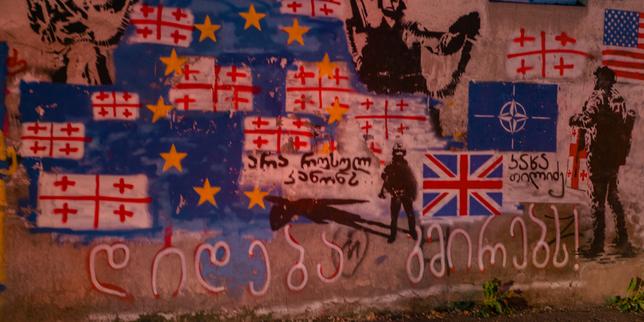
For years, Tbilisi looked like a beacon of post-Soviet democratization, waving European Union flags and shouting down Kremlin influence. Today, that energy has completely flipped. The ruling Georgian Dream party has systematically dismantled its bridges to Brussels and Washington, opting instead for a quiet, pragmatic alignment with Russia. If you only look at official state rhetoric, leaders claim they still want European integration. But their actual policies tell a completely different story.
The Domestic Roots of the Shift
Many analysts try to blame this geopolitical U-turn entirely on external pressures or the war in Ukraine. That misses the point. The driving forces are internal. The ruling elite realized that maintaining a genuine, functioning Western-style democracy meant eventual political suicide for them. Independent courts, a free press, and active civil society groups leave no room for entrenched authoritarian control. For an alternative look, check out: this related article.
By copying foreign agent laws and cracking down on civil liberties, the government chose regime survival over Euro-Atlantic integration. They didn't stumble into this alliance with Moscow by accident. They calculated that betting on a Russian-dominated regional order offered better long-term job security for their political monopoly.
Economic Gravity and the Moscow Pull
Politics follows money, and Georgia's economic ties have shifted eastward faster than many realize. Direct flights resumed, trade corridors opened up, and Russian capital began flowing back into the local market with very few questions asked. Related insight regarding this has been shared by NBC News.
When Western capitals threatened sanctions or diplomatic isolation over democratic backsliding, Tbilisi didn't flinch. Instead, authorities leaned harder into regional trade partnerships and alternative financial lifelines. The older demographic, heavily influenced by traditional media narratives and lingering economic dependencies, bought into the promise of stability over democratic friction. Meanwhile, the younger generation—often called the Erasmus generation—watches their European future slip away in real-time.
Why the West Miscalculated
Brussels and Washington spent years dealing with Georgia through a lens of wishful thinking. European diplomats kept offering candidate status milestones, assuming that the gravitational pull of economic aid would eventually force local leaders to behave.
That inertia proved fatal to the reform movement. Georgian politicians quickly learned that they could pocket Western financial assistance while spitting on Western values. They figured out the exact tolerance threshold of the international community: strong words, diplomatic warnings, but very few immediate consequences that could unseat the regime.
What Happens Next on the Ground
Street protests in Tbilisi haven't stopped, proving that a massive chunk of Georgian society refuses to accept autocracy lying down. Thousands keep filling public squares despite aggressive police responses and harsh legal crackdowns.
Yet, public anger alone isn't enough to change a government. The missing link remains a unified political alternative capable of turning street-level resistance into a structured electoral threat. Until the opposition figures out how to bridge that gap, Georgia remains stuck on a dangerous tightrope, slowly drifting out of Europe's orbit and straight back into Russia's shadow.