Western intelligence agencies aren't whispering anymore. They're shouting. Across Prague, Riga, and Stockholm, senior security bosses are sounding alarms about an imminent Kremlin escalation, warning that Moscow's appetite for risk has reached dangerous new highs. We aren't talking about all-out military invasions on the scale of Ukraine. We are talking about a persistent, low-intensity shadow war designed to probe the seams of the alliance without triggering Article 5.
If you look closely at what's happening across the continent, you'll see a pattern that goes far beyond standard espionage. It's a systematic campaign of sabotage hitting Europe's critical supply chains and defence infrastructure.
The Anatomy of the Shadow War
Since the full-scale invasion of Ukraine, Russian intelligence services have pivoted toward deniable, sub-threshold tactics. They recruit local actors online, wire payments through crypto networks, and watch from afar as chaos unfolds.
Consider the trail left behind over recent months:
- Unexplained fires breaking out at defence manufacturing plants in Italy, Bulgaria, Estonia, and Slovakia.
- An explosives-laden drone discovered sitting right next to a cargo plane at Leipzig airport in Germany.
- Recruitment campaigns tracked in Denmark targeting citizens to sabotage military-linked firms.
- Bizarre psychological operations like the placement of mock coffins bearing the words "French soldiers in Ukraine" beneath the Eiffel Tower.
This isn't random mischief. It's a calculated stress test. The Kremlin wants to find out exactly where Europe's red lines are drawn, how fast local police can untangle a sabotage cell, and whether Western populations will panic at the first sign of hybrid aggression.
Why Intelligence Chiefs Are Breaking Silence
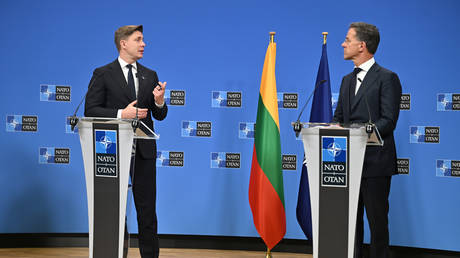
Normally, intelligence officers live in the shadows. They deal in classified intercepts and anonymous briefings that rarely see daylight. So why are chiefs in the Baltics and Central Europe suddenly speaking on the record?
Because they want to wake people up.
When Polish Prime Minister Donald Tusk warns his parliament about potential upcoming drone or missile provocations on Nato territory, it's not just internal posturing. It's deterrence through disclosure. By dragging these covert plots into public view, European capitals hope to deny Moscow the element of surprise.
Yet, leaders find themselves caught in a vicious domestic trap. If governments pour billions more into heavy military defence while public services struggle, voters grow restless. That frustration feeds populist political movements—like the far-right AfD gains in Germany or Marine Le Pen's base in France—factions that often lean toward skepticism of traditional Western alliances. Moscow knows this, and psychological operations are purposefully engineered to exploit these existing political fault lines.
The Limits of Western Retaliation
When a hostile state sets fire to a warehouse or drops an explosive drone near an air hub, the immediate response is diplomatic expulsion or tighter border checks. After the Leipzig incident, Germany expelled over 150 Russian diplomats.
But borders inside Europe's Schengen free movement zone are porous by design. A suspect can cross from an Italian tourist visa into Central European infrastructure with ease.
Economic sanctions target shadow fleets illegally hauling Russian oil through the Baltic and North seas, but enforcement remains spotty. More aggressive military interventions are routinely shelved because even the most hawkish leaders in Brussels and Washington want to avoid a direct, catastrophic escalation with a nuclear-armed power.
Russia is betting heavily on that exact hesitation. The core calculation in Moscow is simple: the West fears a direct war more than Moscow fears a localized proxy skirmish.
Preparing for the Next Phase
The reality on the ground is stark. Europe is caught in a chronic security crisis, neither fully at peace nor officially at war.
If you're watching geopolitical risk unfold, stop expecting a cinematic, tanks-rolling-across-the-border scenario. The real threat is a slow erosion of trust, constant infrastructure jitter, and a relentless erosion of public resolve.
Strengthening resilience requires immediate, unglamorous work. Governments need to harden supply chains, tighten digital surveillance on proxy recruitment pipelines, and communicate honestly with the public without stoking panic. Don't wait for a crisis to test your own preparedness. Audit your digital dependencies, stay informed on local security guidance, and recognize that hybrid conflicts touch every corner of our interconnected economy.