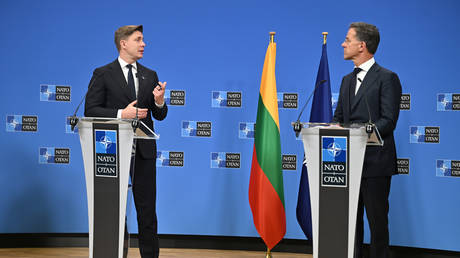
Donald Trump recently took to Truth Social to share an 87-second clip of Pakistani Prime Minister Shehbaz Sharif praising him. During the 81st United Nations General Assembly, Sharif publicly credited the US president for a "timely intervention" that supposedly pulled India and Pakistan back from the brink of total war during Operation Sindoor. Trump did not add a caption. He simply let the video do the talking.
If you follow international politics, you know this diplomatic theatre happens every time global leaders gather in New York. Washington claims credit for mediating regional crises. Islamabad amplifies that narrative to project international backing. New Delhi rolls its eyes and sticks to the facts.
Let's look past the social media clips and examine what actually happened, why Trump keeps pushing this narrative, and why India's official stance remains completely unchanged.
The Reality Behind Operation Sindoor and the Ceasefire
To understand why Trump sharing this speech matters—or doesn't matter—you need context on the military confrontation itself. Following the devastating April 2025 terror attack in Pahalgam, which claimed 26 civilian lives, India launched Operation Sindoor. The military operation targeted cross-border terror infrastructure inside Pakistan and Pakistan-Occupied Kashmir.
For four intense days, the two nuclear-armed neighbors traded blows. Then, hostilities ceased abruptly.
Here is where the stories diverge completely. Washington and Islamabad want you to believe that American diplomatic muscle, late-night phone calls, and the implicit threat of heavy trade tariffs forced a breakthrough. Trump loves telling audiences that he has settled numerous conflicts globally, asserting that Sharif credited him with saving upwards of 30 million lives.
New Delhi tells a totally different story. Indian authorities have maintained from day one that no third-party mediation took place. The military de-escalation happened because Pakistan's Director General of Military Operations reached out directly to his Indian counterpart through established military hotlines to request a halt.
When two militaries talk directly to stop shooting, calling it an American-brokered peace deal is pure political branding.
Why Shehbaz Sharif is Playing to the American Gallery
Sharif's UNGA speech was designed for two specific audiences: domestic hardliners at home and Donald Trump in Washington. By praising Trump’s "resolute and visionary leadership," Islamabad achieves a few goals:
- It flatters an American president who heavily values personal loyalty and public praise.
- It attempts to internationalize bilateral disputes like Kashmir and the Indus Waters Treaty by pulling Washington into the South Asian orbit.
- It shifts the narrative away from the root cause of Operation Sindoor, which was cross-border terrorism.
During the same address, Sharif labeled Operation Sindoor as "external aggression" under Article 51 of the UN Charter while glorifying Pakistan's military leadership. Yet, the glowing praise reserved for Trump stood out because it gave the US leader fresh ammunition to claim foreign policy victories on social media.
Trump's decision to share that specific clip on Truth Social isn't about validating Pakistan's foreign policy goals. It is about reinforcing his personal brand as a global dealmaker who stops wars with a phone call.
The Unresolved Flashpoints Nobody is Fixing
While politicians trade compliments at the United Nations, the underlying tensions between India and New Delhi's western neighbor remain deeply frozen.
India hasn't backed down on its punitive measures following the Pahalgam attack. New Delhi placed the 1960 Indus Waters Treaty in indefinite abeyance, linking any future cooperation to verifiable actions against cross-border terror networks. Sharif used his UN platform to warn that any attempt to divert Pakistan's share of water would be treated as an act of war.
At the same time, India’s permanent mission continues to use its Right of Reply to tear down Pakistan's recurring attempts to weaponize international forums for Kashmir. Sharing an 87-second video clip doesn't resolve a single water dispute, alter ground realities in Kashmir, or dismantle terror launchpads.
What Happens Next
Don't expect Washington to change its tune. Trump will likely continue pointing to South Asia as another trophy on his list of settled conflicts, regardless of what Indian diplomats say.
For anyone analyzing foreign policy, separate the noise from the machinery. Social media shares and podium thank-yous make for great television and viral headlines. They do not rewrite the operational history of how modern military boundaries are managed on the ground.
Keep your eyes on actual security metrics and bilateral communication channels instead of digital applause lines. That is where the real story unfolds.