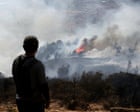
Smoke is choking the skies above one of South America's most treasured colonial towns.
Colombian authorities have officially declared a state of public calamity as a massive wildfire rips through the mountains surrounding Villa de Leyva. This isn't just a local emergency. Nearly 20 active blazes are currently tearing across the country, fueled by extreme dry spells and the early arrival of severe weather shifts linked to El Niño.
If you've ever walked the massive cobblestone plaza of Villa de Leyva, you know why this hits so hard. It's a historical crown jewel located about 160 kilometers north-east of Bogotá. Now, instead of tourists admiring whitewashed walls and mountain backdrops, hundreds of firefighters and volunteers are battling walls of flame.
The Scale of the Disaster in Villa de Leyva
The fire ignited on a steep mountain overlooking the town. High-altitude winds turned a localized hotspot into a fast-moving threat.
By Sunday evening, the damage was staggering. Roughly 290 hectares had burned down to ash. That equals about 400 soccer fields of native vegetation destroyed in a matter of days. Local officials had no choice. They suspended in-person classes and ordered preventive evacuations for nearby hotels and residential pockets.
The response has been massive, but stretched thin. Over 400 people—combining professional firefighters, civil defense units, and local residents—are on the ground trying to build firebreaks. Four specialized helicopters have dropped roughly 240,000 liters of water across 170 separate drops.
Yet, containing the blaze is fighting nature itself.
What Caused This Crisis
Dry conditions are the primary culprit, but human action is under heavy scrutiny too. Fabio Arjona, Colombia's environment minister, pointed out that preliminary findings from disaster management agencies suggest some of these fires might have been deliberately started. Investigations are ongoing.
Arson or accident aside, the broader environmental setup is terrifyingly dry. Colombia's weather agency recently placed 279 municipalities under wildfire warnings. Thirty-six of those sit at the absolute highest red-alert level, heavily concentrated in Andean and Caribbean regions.
And it isn't just Colombia. Neighboring Ecuador is dealing with its own wave of destruction. More than 21,800 hectares have burned across Ecuador this year alone, including a brutal fire on the slopes of the Imbabura volcano that required three intense days of containment.
The El Niño Factor
Why is this happening right now? Blame the cyclical warming of the tropical Pacific Ocean.
El Niño suppresses rainfall and pushes temperatures upward. When you combine bone-dry soil with relentless Andean winds, landscapes turn into tinderboxes. Disaster officials warn that the period of greatest risk spans from October through April. Water shortages and recurring wildfires are going to test local infrastructures to their absolute limits.
If you're planning travel to the region or following South American environmental news, keep a close eye on local updates. Authorities are restricting access to high-risk mountain zones, and emergency protocols remain in full effect across Boyacá and Tolima. Stay informed, respect evacuation orders, and expect travel disruptions as emergency crews work to save what's left of these fragile ecosystems.