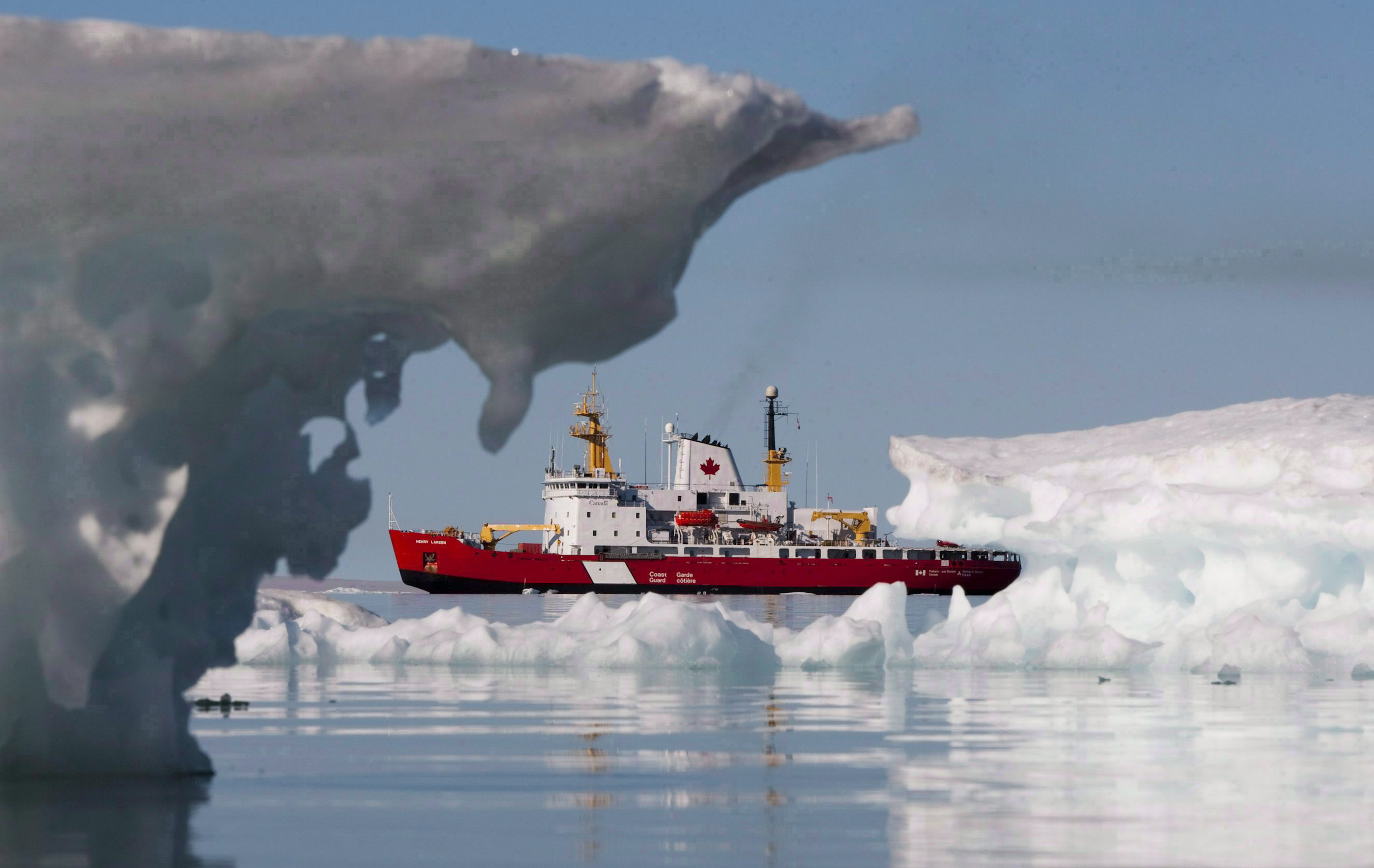
The map at the top of the world is redrawing itself. Ice is melting. Adversaries are closing in. And Ottawa is finally admitting that the old playbook for Canada's North doesn't work anymore.
Foreign Affairs Minister Anita Anand recently laid out a stark reality check during an interview on The West Block, pointing out that threats to Canada's North have shifted significantly. Years of complacency are crashing into a post-2022 geopolitical order. Russia's ongoing war in Ukraine and rising tensions with China mean the polar ice cap is no longer a frozen moat. It’s a frontline.
So what is the federal government actually doing about it? And more importantly, are these moves enough to secure Canada's sovereignty before someone else claims it?
The New Threat Matrix in the Polar North
For decades, Canadian defense policy treated the Arctic as an afterthought. We assumed geography would protect us. We were wrong.
Russia has aggressively militarized its northern coastline, reopening Soviet-era Arctic bases, upgrading deep-water ports, and expanding its fleet of nuclear-powered icebreakers. Meanwhile, China has declared itself a "near-Arctic state," pumping billions into scientific outposts and commercial shipping routes that bypass North American jurisdiction.
When Anand met with U.S. Secretary of State Marco Rubio and other Arctic nations recently, the conversation wasn't about climate science or polar bear conservation. It was about hard security. The collective realization is grim: the North is wide open, poorly monitored, and heavily coveted.
The Blind Spots in Canada's Military Plan
Prime Minister Mark Carney's administration has promised a massive cash injection for defense. But throwing money at a problem without a clear strategy is just expensive noise.
Take the recent moves:
- A massive procurement contract with German firm TKMS to build up to 12 new submarines.
- Ongoing, heavily delayed negotiations for a brand-new fighter jet fleet to replace aging airframes.
- Diplomatic expansions like opening a Canadian consulate in Nuuk, Greenland, and another planned for Anchorage, Alaska.
Submarines and fighter jets look great on a press release. But submarines don't stop foreign research vessels from mapping Canadian seabeds. Fighter jets based thousands of kilometers south don't provide a continuous radar blanket over the Northwest Passage.
We are buying high-end military hardware for a conventional war while ignoring the day-to-day enforcement gaps in our own backyard. If you don't have boots on the ground, deep-water ports in the high Arctic, and year-round surveillance drones, you don't own the territory—you just claim it on paper.
The Paradox of the American Alliance
There is an even bigger problem that politicians rarely talk about in public. While Ottawa leans heavily on Washington to secure the Arctic, local northerners don't necessarily see our closest ally as a savior.
Recent polling data from the Observatoire de la politique et la sécurité de l'Arctique (OPSA) reveals a shocking disconnect. Nearly half—48 percent—of residents in Canada's North view the United States as the single greatest threat to the region. Russia trailed far behind at 30 percent, with China at 12 percent.
Think about that for a second.
The people actually living on the frontlines are more worried about American hegemony and Washington's refusal to fully recognize Canada's legal claims over the Northwest Passage than they are about Moscow. The U.S. views the Northwest Passage as international waters. Canada views it as internal sovereign waters. That is a massive, unresolved conflict baked right into our primary defense partnership.
When Anand talks about keeping the U.S. at the table through NATO and bilateral talks, she's walking a tightrope. We need American military muscle to deter Russia and China, but that same muscle routinely challenges our sovereignty.
What Needs to Happen Right Now
If Canada wants to survive the geopolitical scramble for the Arctic, we have to stop treating the North like a remote tourist destination.
We need decentralized, community-led radar and surveillance networks operated by the Indigenous communities who know the ice better than any satellite ever could. We need deep-water docking facilities in Nunavut and the Yukon so our Coast Guard can operate 365 days a year instead of retreating when winter hits. And we need an honest conversation with Washington about the legal status of our waterways.
The threats have shifted. Our mindset has to shift faster.
Stop waiting for a crisis at 80 degrees North to force Ottawa's hand. Build the infrastructure, back the people who live there, and secure the border before someone else decides it's theirs for the taking.