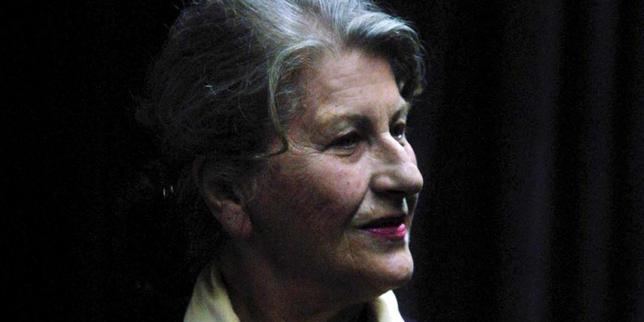
History doesn't always end with a clean reckoning. Sometimes, architects of immense human suffering simply live to a very old age, fading into quiet obscurity while the shadows they cast remain painfully long. Biljana Plavsic, the former wartime president of Republika Srpska and a convicted war criminal, died in Belgrade at the age of ninety-six. Her passing closes the book on one of the most chilling trajectories of the twentieth-century Balkans: a university professor of biology who traded academic theory for radical nationalism, transforming into what supporters once dubbed the "Serb Iron Lady" and what international courts judged an architect of ethnic cleansing.
If you want to understand how ordinary professionals can pivot into fanaticism, Plavsic's life offers a grim, instructive case study. Born in Tuzla in 1930, she spent decades in the academic sphere. She earned a doctorate in botany from the University of Zagreb, specialized in electron microscopy in London, and published over a hundred scientific papers. By all outward metrics, she was an established intellectual. Yet, as Yugoslavia fractured in the early 1990s, she abandoned science for politics, joining the Serbian Democratic Party (SDS) alongside Radovan Karadzic.
What drove a respected scientist to embrace policies of mass deportation, persecution, and extermination? Plavsic didn't hide behind diplomatic doublespeak during the 1992–1995 Bosnian War. She openly articulated extreme nationalist ideologies, viewing the conflict through an uncompromising biological lens. Her descent into extremist rhetoric shocked many who knew her pre-war academic persona, proving that education offers no immunity against the pull of ethnic chauvinism.
In 2001, the International Criminal Tribunal for the former Yugoslavia (ICTY) indicted her on multiple counts of crimes against humanity and violations of the laws or customs of war. Unlike many of her contemporaries who dug in their heels and denied all wrongdoing for decades, Plavsic made a calculated move. In 2003, she entered a plea bargain. She admitted guilt to persecution on political, racial, and religious grounds, resulting in an eleven-year prison sentence served primarily in Sweden.
That confession was historic. At the time, international prosecutors heralded it as a rare moment of accountability from a high-ranking political leader in the former Yugoslavia. Victims' associations hoped it signaled a turning point toward collective truth and reconciliation.
Those hopes proved premature.
Years later, after serving two-thirds of her sentence and securing release in 2009, Plavsic did something that exposed the fragility of her courtroom remorse. She recanted. In interviews with journalists and Swedish media, she brazenly claimed her guilty plea was merely a legal strategy to drop harsher charges like genocide, stating bluntly that she "didn't do anything wrong." It was a staggering walk-back that devastated survivors and underscored how hollow legal settlements can be when unmoored from genuine moral reckoning.
Her final years in Belgrade were spent in quiet seclusion. She avoided public political life, existing as a ghost of a violent era that millions are still trying to heal from. But her death serves as a sharp reminder of unfinished business in the Balkans. Impunity may not always win, but accountability often arrives bruised, incomplete, and contested.
As we look back at her life and death, the lesson isn't just about one woman's ideological corruption. It's about how fragile societal fabrics are when intellectuals weaponize identity, and how difficult true justice remains long after the last gun falls silent. Don't expect closure from a death certificate. Real closure requires confronting the doctrines Plavsic left behind—doctrines that still linger in the political rhetoric of the region today. Pay attention to how history is taught, remember the cost of radical nationalism, and refuse to let the architects of hatred slip away into sanitized silence.