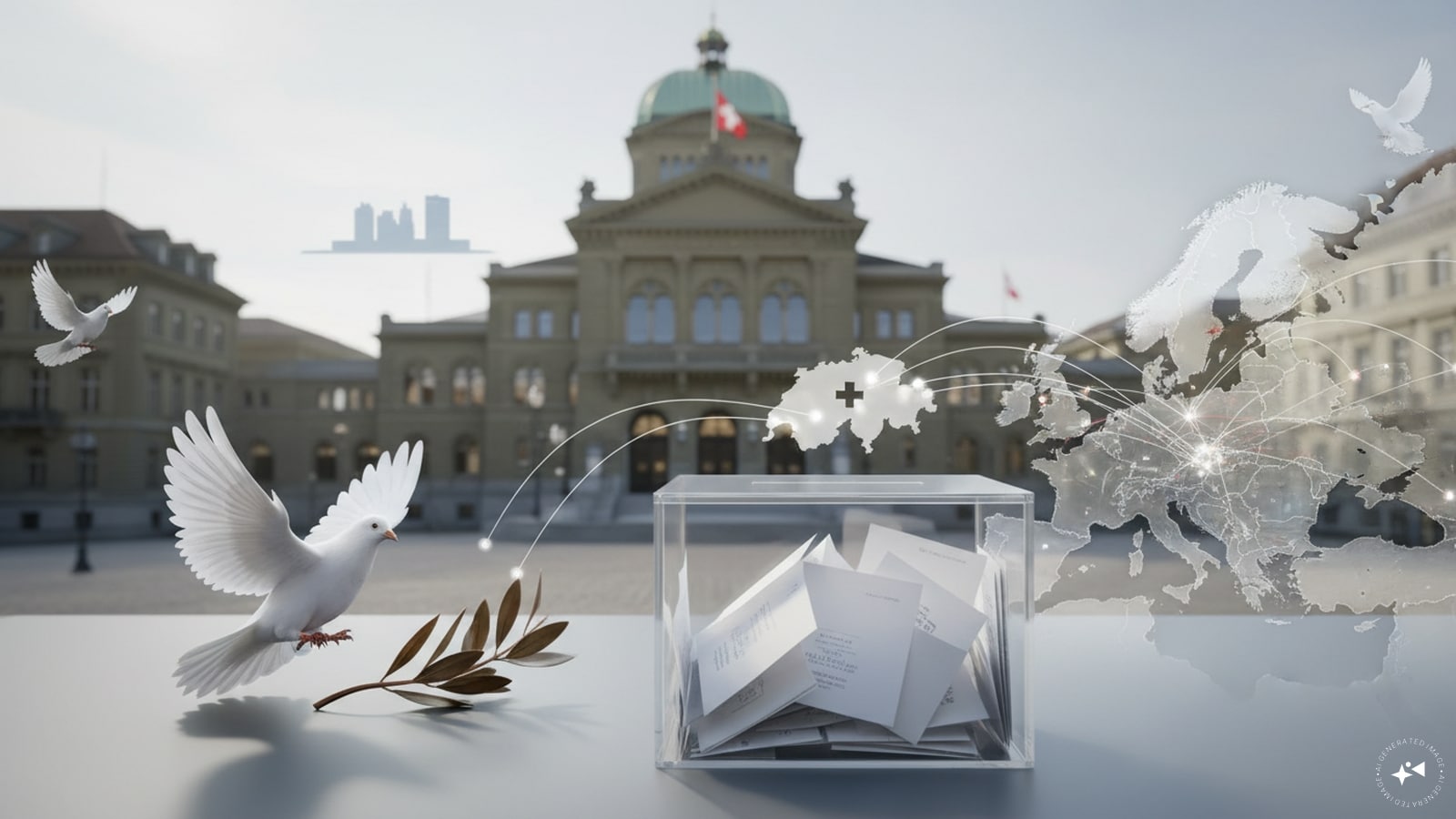
Switzerland's centuries-old tradition of neutrality just faced a reckoning at the ballot box. Voters went to the polls to decide on the "Safeguard Swiss neutrality" initiative, a push by right-wing hardliners to enshrine a rigid, unyielding definition of neutrality directly into the Swiss constitution. Had it passed, the measure would have legally barred Bern from imposing independent economic sanctions or engaging in peacetime cooperation with military alliances like NATO.
Unsurprisingly, the proposal failed, reflecting a pragmatic understanding that absolute isolation is a dangerous strategy in a volatile geopolitical climate. But the intense debate leading up to the vote reveals deep anxiety over what it means to be a neutral nation when global conflicts land on Europe's doorstep.
Why the Hardliners Wanted a Strict Neutrality Ban
The push for a constitutional straitjacket didn't materialize out of nowhere. It was spearheaded by the Swiss People's Party (SVP) and veteran politician Christoph Blocher, who argued that Bern compromised its independent standing when it adopted European Union economic sanctions against Russia following its 2022 invasion of Ukraine.
Under the proposed rules, Switzerland would have been forbidden from backing international sanctions unless explicitly mandated by the United Nations Security Council. Proponents claimed that joining Western economic measures turned Switzerland into a de facto belligerent, stripping the country of its credibility as a neutral mediator.
Posters reading "No war, yes to neutrality" plastered Swiss towns, appealing to a deep-seated cultural desire to stay completely detached from foreign entanglements. For many traditionalists, neutrality isn't a policy that adapts to circumstances; it is an absolute moral shield that kept the country safe through both world wars.
The Reality of Flexible Neutrality
The problem with a rigid constitutional ban is that it ignores how Swiss neutrality has always actually worked. Switzerland has never been entirely frozen in time or isolated from its neighbors. While the country has maintained formal political non-alignment since 1815, successive governments have always applied the doctrine with a heavy dose of pragmatism.
Switzerland joined NATO's Partnership for Peace, participates in international peacekeeping missions, and trades freely with global superpowers. When security landscapes shift, standing completely still is a liability rather than a virtue.
Foreign Minister Ignazio Cassis pointed out the absurdity of the restrictions during the campaign, noting that a rigid ban would leave the government with no tools beyond issuing empty verbal condemnations. In an era defined by cyber warfare, cross-border intelligence sharing, and integrated European air defense initiatives, cutting off routine coordination with neighboring democracies would isolate Switzerland right when it needs cooperation the most.
What Happens Next for Swiss Foreign Policy
While voters ultimately rejected the initiative by a decisive margin, the underlying tensions aren't going away. Switzerland remains trapped between its desire to profit from global integration and its romantic attachment to historical isolation.
The economic reality is simple. As a wealthy, highly globalized nation deeply reliant on Western financial systems and European markets, pretending that Bern can completely divorce its foreign policy from its geopolitical neighbors is an illusion.
Instead of retreating into a strict legal dogma, Switzerland will likely continue walking a tightrope—balancing its identity as an independent mediator with the practical security demands of modern Europe. The vote proves that most citizens prefer flexibility over ideological purity, recognizing that surviving the future requires more than just locking the front door.