"Mayday, Mayday, Mayday. I've lost thrust."
Those chilling words crackled over aviation radio frequencies just before 7 p.m. on a Tuesday evening, marking the start of a high-stakes emergency off the California coast. A private military training jet, an MK-58 Hawker Hunter operated by the Airborne Tactical Advantage Company (ATAC), was spiraling downward into the Pacific Ocean. The pilot, flying out of Naval Air Station Point Mugu, faced a catastrophic engine failure at thousands of feet in the air.
If you are wondering how a routine military training flight turned into a dramatic ocean rescue near Morro Bay, you are not alone. Aviation enthusiasts and local residents alike have been parsing flight tracking data and emergency audio to figure out what went wrong.
Here is the breakdown of the incident, the aircraft involved, and what happens next.
The Final Moments of Flight SNAKE4
The flight started like many others for ATAC, a defense contractor that provides adversary air services for the U.S. military. The aircraft, call sign SNAKE4, was conducting exercises off Monterey Bay alongside other jets.
According to flight tracking data and radio logs, trouble began when the pilot had to manage fuel constraints after another plane experienced a delay. While flying south down the San Luis Obispo County coast, the Hawker Hunter suffered a complete loss of engine thrust.
Air traffic controllers tried to vector the stricken jet toward the closest safe landing strip at Paso Robles Airport. But the vintage single-engine fighter was dropping fast, descending at thousands of feet per minute. Realizing a runway was out of reach, the pilot executed the emergency protocol, pulled the ejection handle, and punched out of the aircraft.
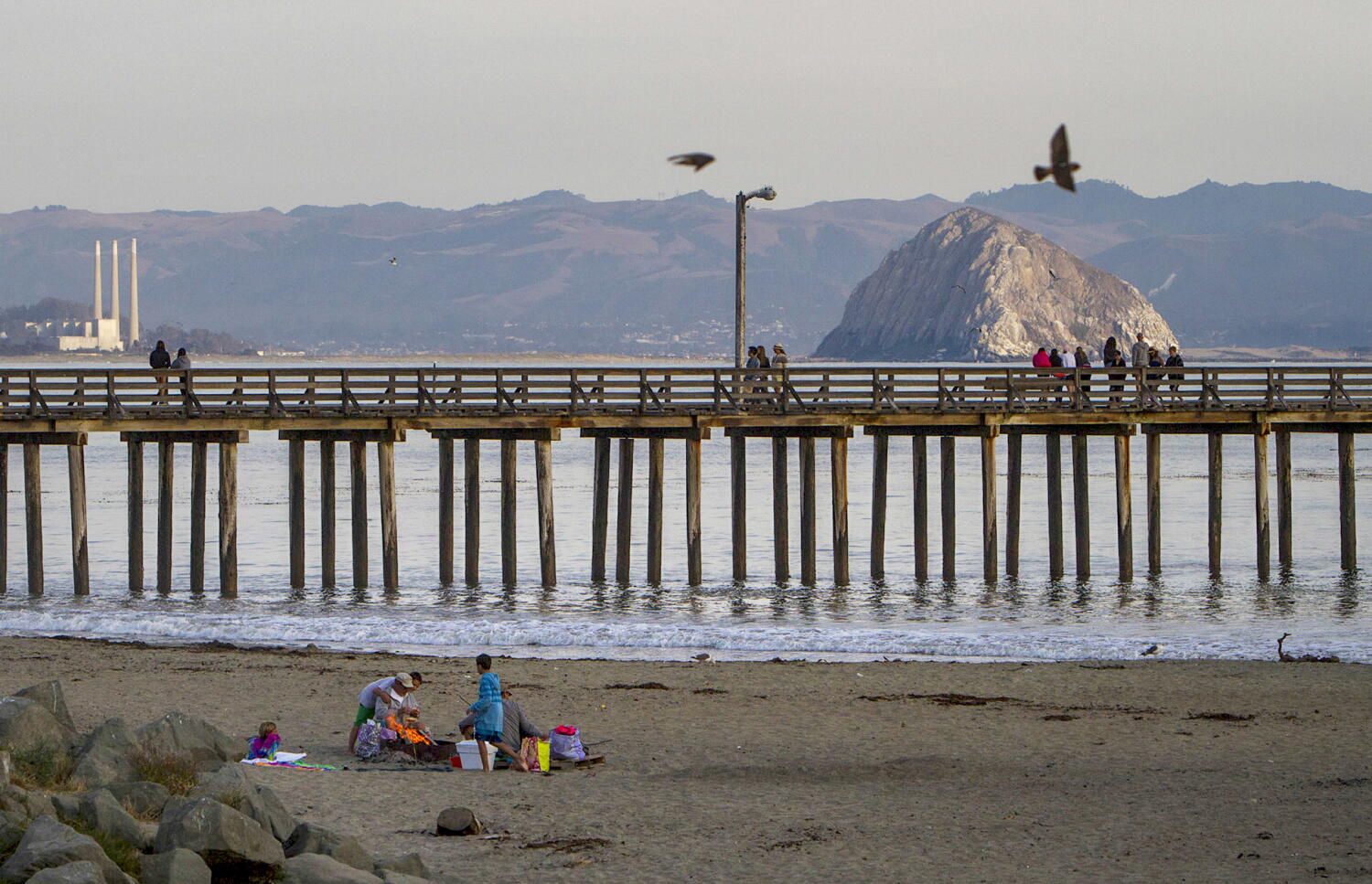
The jet plummeted into the Pacific roughly six miles northwest of Morro Bay, disappearing off radar near Harmony Headlands State Park.
The Dramatic Rescue Operation
Time is measured in seconds when a pilot hits the water at night. Coastal fog and darkness complicated the initial response, but local and federal agencies sprang into action immediately.
A U.S. Coast Guard sector watch-stander received notification of the downed aircraft around 6:50 p.m. While Coast Guard vessels from Morro Bay headed toward the coordinates, a Navy search and rescue helicopter swept into the area.
Roughly thirty minutes after the emergency call, the Navy helicopter located the pilot bobbing in the ocean. Rescuers hoisted him safely out of the water. ATAC later confirmed that the pilot was in good condition after the ordeal and even managed to speak with coworkers while being transported to a hospital in Fresno for medical evaluation.
The aircraft itself wasn't as fortunate. Coast Guard ships searching the area reported smelling jet fuel in the air, but the dark, foggy conditions and deep water meant zero visible wreckage or floating debris was recovered on the first night. NOAA tracking noted the potential hazard of nearly 1,000 gallons of JP-5 jet fuel, prompting warnings for local mariners to navigate the area with extreme caution.
Why Private Contractors Fly Cold War Jets
Most people assume all military training happens inside modern, state-of-the-art stealth fighters owned exclusively by the Pentagon. In reality, private defense contractors play a massive role in training American pilots.
Companies like ATAC employ civilian pilots—often retired military aviators—to fly adversary "aggressor" roles during training exercises for TOPGUN and fleet integration events. To do this economically, they rely on vintage, high-performance military aircraft.
The MK-58 Hawker Hunter is a British-designed, Cold War-era jet known for its speed and reliability in transonic flight roles. Yet, flying decades-old airframes comes with inherent risks. Mechanical components age, and sourcing replacement parts for legacy jets is an ongoing challenge for private contractors.
What Happens Next
The Federal Aviation Administration and the National Transportation Safety Board have launched an official joint investigation alongside the Navy.
Because the Hawker Hunter sank into deep ocean waters and hasn't been recovered, investigators face an uphill battle. Without physical access to the engine components, determining the exact root cause of the sudden thrust loss relies heavily on flight data logs, radio transmissions, and maintenance records.
If you spot any debris, parts, or fuel sheen while boating along the Central California coast, the Coast Guard urges you to report it immediately to Sector Los Angeles-Long Beach rather than attempting recovery yourself.
The skies over the Pacific are quiet again for now, but the questions surrounding aging contractor fleets and high-altitude emergencies will linger long after the wreckage is found.