People still treat measles like a retro childhood inconvenience. A bad rash. A few days off school. The reality is far more brutal. A 40-year-old unvaccinated woman in Jefferson County, Pennsylvania, just died from measles complications. She didn't just have a bad case of the spots. She suffered from chronic obstructive pulmonary disease and asthma. When a highly contagious respiratory virus meets damaged lungs, the outcome is often fatal.
This Pennsylvania measles death shatters a dangerous myth. The narrative that this virus only poses a threat to unvaccinated toddlers is factually incorrect and actively getting adults killed. If you think you're safe just because you aren't in elementary school, you're dead wrong.
The Pennsylvania measles death exposes a massive vulnerability
The details out of Pennsylvania are grim. The state is currently facing the worst measles outbreak in the country, with 676 confirmed cases spread across 37 counties. The outbreak has heavily concentrated in rural areas with large farming communities like Lancaster and Mifflin counties. The virus is spreading fast, and it doesn't care how old you are.
This 40-year-old woman contracted the virus after coming into contact with a lab-confirmed case. She was entirely unvaccinated. Her underlying health problems made her a prime target for severe complications.
This brings the state's total measles-associated deaths to three in 2026. Two infants died earlier in August. One baby boy died of a ruptured spleen shortly after birth, while a 6-week-old girl with a rare genetic disorder called Amish lethal microcephaly also succumbed to the disease.
The sheer volume of severe cases is alarming. Out of those 676 cases in Pennsylvania, 124 people ended up in the hospital. That is roughly an 18 percent hospitalization rate. Read that number again. Nearly one in five unvaccinated people catching this virus get sick enough to require a hospital bed.
How we lost control of a beaten virus
By the year 2000, the United States officially eliminated measles. We had beaten it. Pediatricians went entire careers without ever seeing a single case. The vaccine was so incredibly effective that it essentially erased the collective memory of how brutal the disease actually is.
We got lazy. We stopped treating the virus like a deadly threat and started treating the vaccine like an optional lifestyle choice.
Now, we're paying the price. Pennsylvania Governor Josh Shapiro recently pointed out that the rate of families seeking philosophical or religious exemptions from vaccines in the state has tripled over the past decade. That staggering drop in vaccination rates actively destroys community protection. When you combine massive pockets of unvaccinated people with one of the most highly contagious airborne viruses on the planet, you get a catastrophe.
The nation is now on the verge of losing its official elimination status entirely because of these ongoing, massive outbreaks. We're moving backward in real time.
The unforgiving math of herd immunity
People throw around the phrase "herd immunity" without actually understanding the mathematics behind it.
Because measles is so highly infectious, you need roughly 95 percent of a population to be fully vaccinated to stop the virus from spreading. The virus has a reproduction number of 12 to 18. That means a single sick person will infect up to 18 other people. The virus hangs in the air for up to two hours. You can catch measles simply by walking into an empty elevator an hour after an infected person coughed in it.
When community vaccination rates drop down to 90 percent or 85 percent, the virus spreads like wildfire. It hunts down every single vulnerable host in the area. It finds the 40-year-old woman with asthma. It finds the newborn babies who are too young to get their first shot. It finds the elderly cancer patients undergoing chemotherapy.
You don't get vaccinated just to protect yourself. You get vaccinated to build a biological wall around the people whose immune systems are too broken to fight. When that wall falls, the most vulnerable people in the community die first.
Why asthma and COPD change the math completely
Let's talk about what measles actually does to an adult body. Measles is a respiratory virus. It attacks the respiratory tract first before spreading throughout the entire body to cause that signature full-body rash.
For a healthy person, the inflammation in the airways is deeply uncomfortable. For someone with chronic obstructive pulmonary disease (COPD) or asthma, that inflammation is a death sentence.
COPD already narrows the airways and heavily damages the tiny air sacs in the lungs called alveoli. Asthma causes hyper-reactive airways that constrict and fill with thick mucus at the slightest irritation. When the rubeola virus invades these already compromised tissues, it triggers massive, uncontrollable swelling.
This sets off a catastrophic chain reaction inside the chest cavity. The lungs rapidly fill with fluid. Gas exchange simply stops working. The patient struggles for every single breath while their blood oxygen saturation plummets. This state can quickly escalate into acute respiratory distress syndrome.
With ARDS, you essentially drown from the inside out. Mechanical ventilation becomes the only option, and even then, survival is far from guaranteed. The damaged lung tissue also becomes a perfect breeding ground for severe secondary bacterial infections. Most adults who die from measles don't actually die from the virus itself. They die from the aggressive bacterial pneumonia that exploits the damage the virus left behind.
The terrifying reality of immune amnesia
There is a sinister secondary effect of this virus that nobody talks about. Measles literally deletes your immune system's memory.
Scientists call this immune amnesia. When you catch measles, the virus specifically targets and destroys memory B cells and T cells. These are the microscopic soldiers in your blood that remember how to fight off viruses and bacteria you've encountered in the past.
If you survive a measles infection, your immune system is essentially wiped clean. You lose your acquired immunity to everything from the seasonal flu to strep throat for up to two or three years. You could survive the initial measles infection only to die from a completely routine cold virus six months later because your body simply forgot how to fight it.
For an adult with underlying health problems, immune amnesia is devastating. Your body is already working overtime to manage chronic inflammation or autoimmune issues. Wiping out your immune defenses is the absolute last thing you can afford.
The political chaos surrounding the outbreak data
Right now, there is a fierce debate happening behind closed doors regarding how we even classify a measles death.
While the local coroners and the Pennsylvania state health department have classified all three of these fatalities as measles-associated, the Centers for Disease Control and Prevention has pushed back. The CDC is currently holding off on recording these fatalities in their national data. They are actively working with epidemiologists to develop a standardized definition for a measles death.
The situation is incredibly messy. Health and Human Services Secretary Robert F. Kennedy Jr. even questioned the validity of the infant deaths in Pennsylvania, suggesting they might be fabricated. State officials firmly stand by their clinical assessments. The Lancaster County coroner explicitly listed measles as a significant condition contributing to the baby boy's death. Infectious disease experts point out that measles causes severe inflammation of the spleen, which directly explains the rupture.
You can't let political arguments over data classification distract you from the clinical reality on the ground. The virus hospitalizes unvaccinated adults at staggering rates. That fact remains true regardless of how government agencies format their spreadsheets.
The 1989 vaccine gap you probably ignored
Many adults walk around assuming they're completely immune because they got a shot when they were kids. That assumption is incredibly dangerous.
Prior to 1989, the standard medical protocol was to give children only one dose of the measles, mumps, and rubella (MMR) vaccine. It wasn't until a massive epidemic between 1989 and 1991, which sickened over 55,000 people and killed 166, that the CDC officially recommended a two-dose schedule.
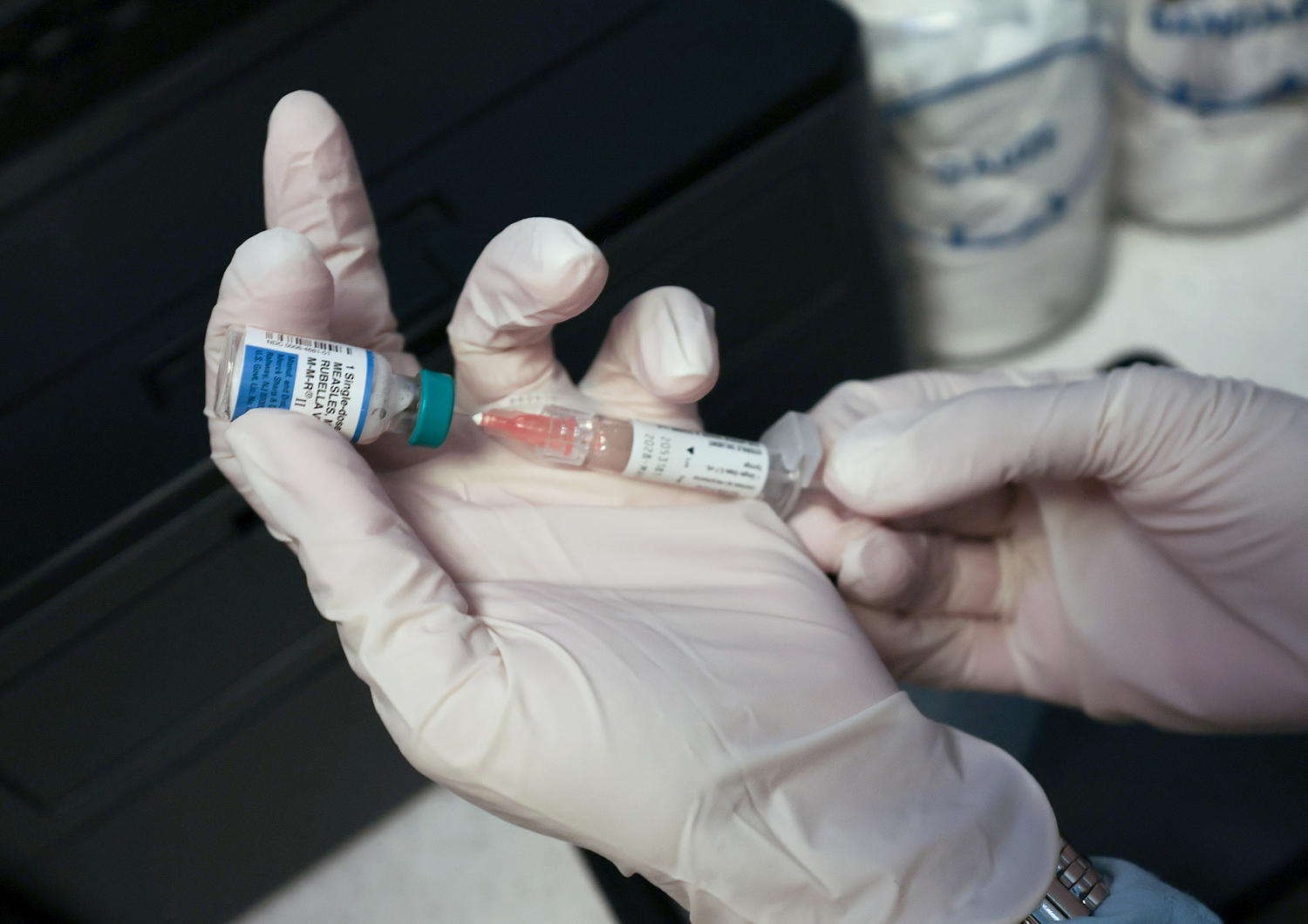
If you were born before 1989, there is a very good chance you only received a single dose. A single dose provides good protection, but it isn't bulletproof. Two doses of the MMR vaccine are 97 percent effective at preventing infection.
If you only have one dose and your immune system is currently compromised by age, COPD, diabetes, or autoimmune disorders, your defenses are down. You're standing in the path of one of the most contagious airborne viruses known to science.
What happens when vaccinated adults catch measles
Breakthrough infections happen. But the clinical data shows a massive difference in outcomes.
In the rare instance of a breakthrough case among fully vaccinated adults, the illness is almost always mild. Your body recognizes the threat immediately and neutralizes it before the virus can cause systemic inflammation or pneumonia. Out of the 676 cases in Pennsylvania this year, only four fully vaccinated people ended up in the hospital.
The vaccine protects against severe illness and death. It keeps you off a ventilator. It keeps your lungs from filling with fluid.
Check your immunity status right now
Don't wait for the outbreak to reach your neighborhood. Taking action takes exactly one phone call.
Call your primary care doctor today. Ask them to pull your childhood vaccination records. If those records are lost or incomplete, ask your doctor to order a simple blood test called a measles titer.
This blood test measures the exact level of measles antibodies in your system. It gives you a definitive answer on whether you are immune or vulnerable.
Talk to your specialist about booster shots
If your titer levels come back low, ask your doctor about getting an MMR booster.
This is especially critical if you have asthma, COPD, heart disease, or an autoimmune condition. You need to have a very frank conversation with your pulmonologist or rheumatologist about your specific risks during a localized outbreak.
Don't guess about your health. Stop assuming you're protected just because you're an adult. Get your medical records. Request the blood test. Protect your lungs before the choice is made for you.