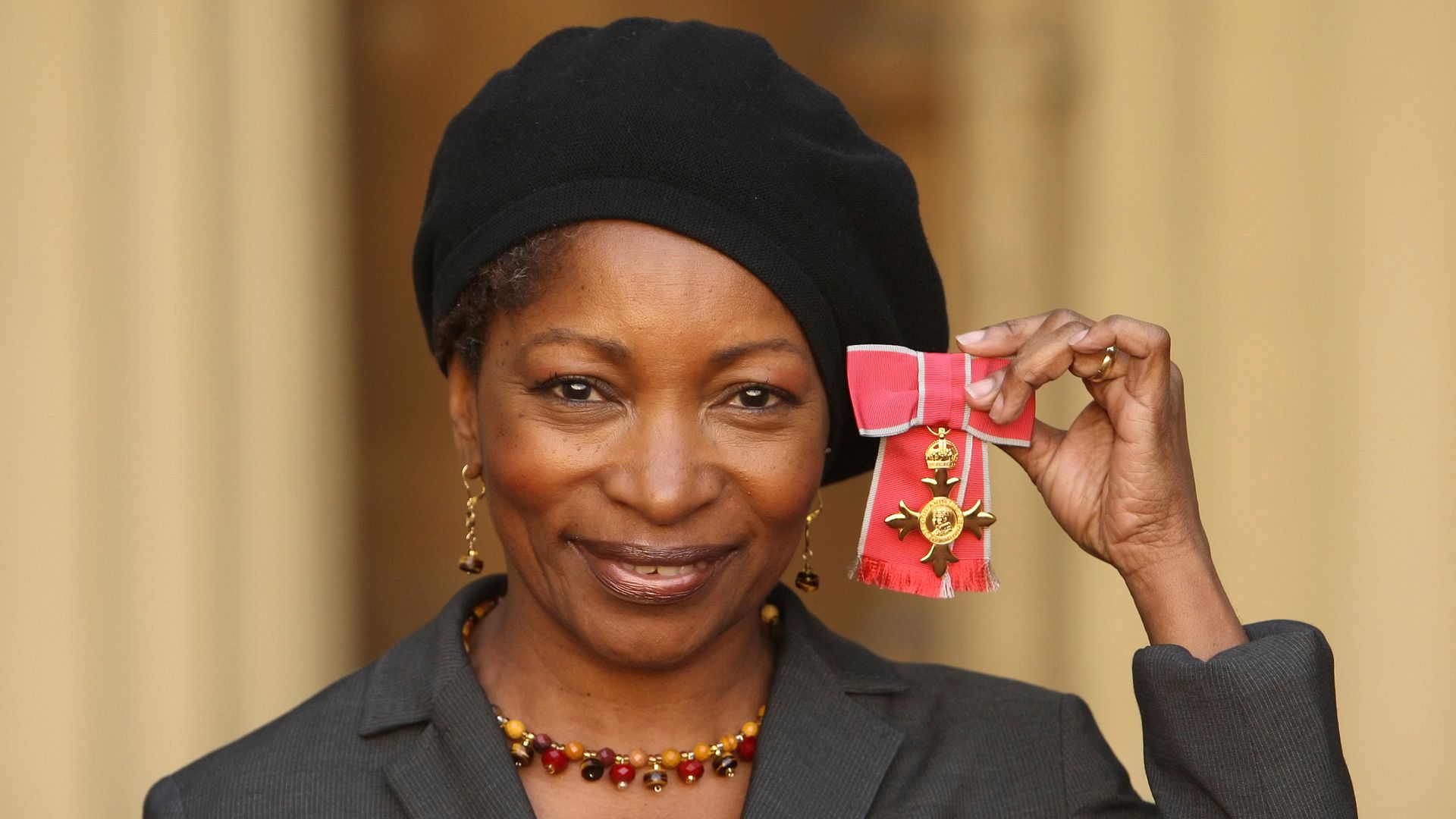
Britain lost one of its sharpest cultural critics when Bonnie Greer died at the age of 77 following a brief illness.
If you only knew her from late-night television sofa debates or her frequent appearances on BBC programs like Newsnight Review, you missed half the picture. She wasn't just a talking head. She was a powerhouse playwright, an experimental novelist, a fierce public intellectual, and an institutional reformer who quietly reshaped how British cultural spaces thought about themselves. Her husband, David Hutchins, confirmed her passing, remembering her as a partner and inspiration whose distinct voice left an indelible stamp on public life.
Let's look at what made her so vital, and why her absence leaves such a glaring hole in contemporary arts discussion.
From Chicago's South Side to the British Cultural Establishment
Born in Chicago in 1948, Greer grew up in a strict Roman Catholic household as the eldest of seven children. Her early life felt sheltered, but a sudden pivot into university theater and bohemian circles unlocked a lifelong appetite for performance, text, and subversion. She studied playwriting under David Mamet—an experience that gave her an early front-row seat to gritty, punchy American drama—before migrating to the UK in the mid-1980s. She became a British citizen in 1997.
Most foreign commentators might have stayed in their lane, offering niche insights on American imports. Greer did the opposite. She soaked up her adopted home entirely, diving headfirst into the friction between British and American culture.
Her fiction and drama tackled identity long before it became a corporate buzzword. Her 1994 debut novel, Hanging by Her Teeth, mapped a Black American woman's travels through the US and Europe hunting for her father. Later works like Obama Music (2009) and her 2014 memoir A Parallel Life underscored her obsession with duality, politics, and the weight of history.
Why Bonnie Greer Mattered on Television
Television in the 1990s and 2000s wasn't exactly known for welcoming diverse intellectual voices. Panels were overwhelmingly pale, male, and academic. Greer walked into that space with a throaty laugh, absolute fearlessness, and a brain that moved twice as fast as anyone else in the room.
She didn't posture. She didn't read from a script. When she appeared on cultural review shows or high-stakes political broadcasts like Question Time—most famously squaring up against British National Party leadership in 2009—she grounded her arguments in deep literary knowledge and sharp wit.
Novelist Bernardine Evaristo noted that during the 1990s and 2000s, Greer was arguably the most prominent Black cultural commentator in the UK. She paved a path where none existed, acting as a pioneer for an entire generation of writers and broadcasters who finally saw someone who looked like them holding court on mainstream networks.
Institutional Impact Beyond the Page
It is easy for brilliant writers to isolate themselves in their studies. Greer chose a messier path. She rolled up her sleeves and joined the boards of major British institutions.
She served as deputy chair of the British Museum, sat on the boards of the Royal Opera House and the London Film School, and eventually became chancellor of Kingston University. She didn't take these roles for prestige. She used them to force massive, historic institutions to confront their blind spots. For her extensive services to the arts, she was appointed an OBE in 2010 and became a fellow of the Royal Society of Literature in 2022.
She once famously summarized her perspective on race with typical precision: "When I wake up in the morning, I'm just myself. It's only when I leave the door that I become a black woman to the world."
That clarity guided her through decades of public debate. She refused to let anyone flatten her into a single category. She was a lover of experimental fiction, a gym enthusiast, a James Baldwin devotee, and a fierce defender of nuance.
The cultural landscape is quieter now that she's gone. If you want to honor her legacy, pick up her books, watch her old panel archives, and refuse to accept simple answers to complex questions.