Some fugitive cases fade into the background noise of police archives. Others simmer for years until a single break changes everything.
That is what happened when a multi-year manhunt for an Ontario attempted murder suspect finally reached its conclusion over a thousand miles away in northern Manitoba. For investigators tracking high-level violent crime and drug networks crossing provincial lines, the arrest marks a major closure after years of dead ends. But how do suspects manage to vanish across the vast expanse of Canada, and what does it take for police to catch up with them?
The Roots of the Case in Brampton
The entire ordeal started on February 3, 2022. Officers in Brampton rushed to a shooting scene near Queen Street East and Rutherford Road. They found a victim suffering from serious gunshot wounds. While the victim survived the immediate trauma, the shooter had already fled.
Peel Regional Police launched an intensive investigation that quickly expanded beyond a simple retaliatory shooting. By May 2023, the scope of the operation broadened dramatically. Detectives executed search warrants across the Greater Toronto Area. The hauls were staggering. Police seized five firearms, roughly 10 kilograms of methamphetamine, and large quantities of fentanyl and cocaine.
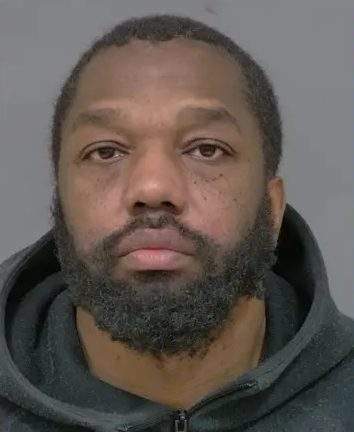
That was the turning point. The investigation tied street-level gun violence directly to organized drug trafficking networks. Facing overwhelming evidence, authorities issued a Canada-wide arrest warrant for 36-year-old Nakeem Jamar Johnson. The list of charges was extensive: attempted murder, conspiracy to commit murder, firearm possession, and multiple counts related to drug trafficking and prohibited weapons.
Yet, Johnson was nowhere to be found. He had gone underground.
Vanishing Across Provincial Borders
Canada is massive, and hiding in plain sight or retreating into remote communities offers fugitives a temporary shield. Tracking someone who knows police are looking for them requires relentless cross-jurisdictional cooperation.
When a suspect faces charges as severe as attempted murder and large-scale weapons and drug offenses, local police forces cannot work in silos. They rely heavily on intelligence sharing, federal policing networks, and provincial detachments. For three years, the trail went cold in Ontario. Fugitives often rely on underground networks, false identities, or isolation to evade detection.
Crossing into a completely different province changes the dynamic. Manitoba is a long way from the Greater Toronto Area. Yet, modern tracking, community tips, and police surveillance eventually narrow the gap.
The Arrest in Cross Lake
The multi-year chase finally ended on September 22. Police caught up with Johnson in Cross Lake, Manitoba, a community roughly 530 kilometres north of Winnipeg.
Making an arrest that far north presents unique logistical hurdles. Remote Northern communities have tight-knit populations, and outsiders stand out quickly. Coordinating a high-risk apprehension involving a suspect wanted for attempted murder and conspiracy requires precise tactical planning between local detachments and specialized units.
Johnson now faces the full weight of the Canadian judicial system, moving from a remote northern arrest back to Ontario to answer to charges that have hung open since 2022.
Violent crime combined with major drug trafficking leaves deep scars in communities. When suspects run, they delay justice, but modern inter-provincial policing ensures that distance does not equal immunity. If you or someone you know has information regarding unsolved violent crimes or fugitive investigations, contact local law enforcement or Crime Stoppers immediately to submit anonymous tips.